
Why Doctors Are Warning About Benadryl: Dementia Risk, Brain Changes, and the Truth Behind the Viral “Benadryl Challenge”
By Rachel Simmons, Health & Wellness Writer
Benadryl has been sitting in medicine cabinets since the 1940s. It’s the drug most people reach for during allergy season, a bad case of hives, or a rough night of sleeplessness, and for decades nobody thought twice about it. But over the last ten years, a growing body of research has raised real questions about what this drug, and the class of medications it belongs to, might be doing to the brain over time. At the same time, a dangerous trend on social media has pushed teenagers to misuse the same medication in ways that have already cost lives. Here’s an honest look at what the science says about Benadryl, dementia, sleep, and dependence, along with what’s actually going on with the “Benadryl Challenge.”
Why Benadryl Isn’t Like Your Other Allergy Pills
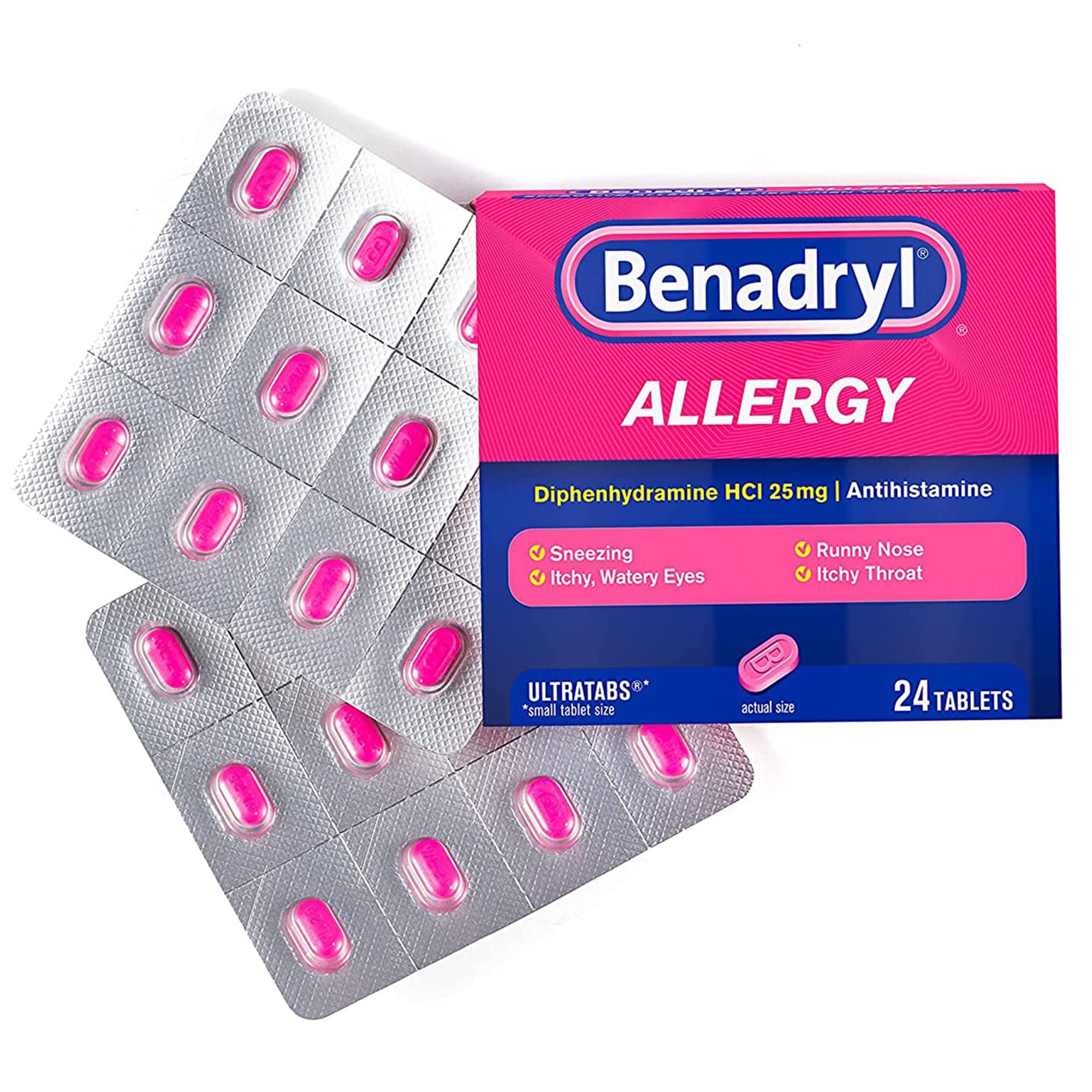
Benadryl’s active ingredient is diphenhydramine, and it belongs to a group called first-generation antihistamines. That “first-generation” label matters more than most people realize. Older antihistamines like diphenhydramine and chlorpheniramine cross the blood-brain barrier easily, while newer ones like loratadine (Claritin), cetirizine (Zyrtec), and fexofenadine (Allegra) mostly stay out of the brain. That’s the whole reason Benadryl makes you drowsy, and Claritin doesn’t.
Histamine isn’t just involved in allergic reactions. In the brain, it also helps keep you alert and promotes wakefulness. When diphenhydramine blocks histamine receptors in the brain, it produces the drowsiness people associate with the drug, and it’s why diphenhydramine shows up as the active ingredient in sleep aids like ZzzQuil and Unisom SleepTabs.
The Anticholinergic Connection: What’s Actually Happening in Your Brain
Here’s the part that concerns researchers most. Diphenhydramine doesn’t just block histamine. It’s also a potent blocker of acetylcholine, a neurotransmitter involved in memory, learning, muscle control, and a long list of other bodily functions. Drugs that block acetylcholine are called anticholinergics, and diphenhydramine is one of the strongest anticholinergics available without a prescription.
Acetylcholine works through several receptor types in the brain called muscarinic receptors, labeled M1 through M5. The M1 receptor is the most common one in the brain and plays an outsized role in the hippocampus and prefrontal cortex, the regions responsible for forming new memories and directing attention and planning. When diphenhydramine blocks M1 receptors, it interferes with the brain’s ability to encode new information in the first place, rather than erasing memories that are already stored.
Researchers have actually been able to watch this happen. Studies using a related anticholinergic drug, scopolamine, found that blocking acetylcholine disrupts a specific hippocampal brainwave pattern called theta oscillations, which the brain relies on to lay down new memories. The effect shows up mainly during the encoding of new information rather than the recall of things learned beforehand, which lines up with the familiar experience of taking a strong antihistamine and later having a hard time remembering what happened while it was in your system. Some researchers now group Alzheimer’s disease, Lewy body dementia, and drug-induced delirium together under the idea of “anticholinergic spectrum disorders,” since all three involve this same acetylcholine shortfall showing up in the brain in different ways.
Benadryl isn’t alone in this category. Older tricyclic antidepressants, certain overactive bladder medications, and some other sedating antihistamines all carry meaningful anticholinergic effects. Researchers usually study these drugs together as a class, using something called an “anticholinergic burden” score, rather than looking at any single drug in isolation. That distinction matters for how the research on Benadryl specifically should be read.
Does Benadryl Cause Dementia? What the Research Shows
The most cited study on this topic followed 3,434 adults 65 and older for about ten years and tracked their cumulative anticholinergic drug use. People in the highest-use group had a 54 percent higher risk of developing dementia compared to people who used these drugs the least. The most common anticholinergic drugs in that study were tricyclic antidepressants, first-generation antihistamines like diphenhydramine, and bladder medications.
That 2015 study was led by Shelly Gray, a pharmacist at the University of Washington’s School of Pharmacy. She and her team weren’t just watching for the obvious grogginess Benadryl is known for. “We know these drugs cause acute changes in cognition,” Gray has said, describing that familiar next-day fog. What actually surprised her group was how many participants went on to develop dementia over the years the study tracked.
It’s important to be precise about what this means. No study has isolated Benadryl on its own and proven that it, specifically, causes dementia. What the research shows is an association between heavier, more frequent, longer-term use of anticholinergic drugs as a class and a higher risk of cognitive decline. Occasional use, like taking a Benadryl once in a while for a bee sting or seasonal allergies, hasn’t been shown to carry meaningful risk. The concern is really about regular, sustained use over months or years, and about the cumulative dose adding up over time. Christopher Paredes, a geriatrician at Northwell’s Lenox Hill Hospital, put it plainly: “there are no studies that found that Benadryl specifically causes dementia” on its own, even though the wider anticholinergic class carries a real signal worth taking seriously. Fellow Lenox Hill physician Alan Manevitz, a psychiatrist who has studied the data, has made a similar point about dosage — he’s noted the added risk “did not occur at the lowest dosage range,” but showed up specifically in people taking higher doses over long stretches of time.
Brain Scans Don’t Lie: How Anticholinergics Show Up on MRI and PET Scans
One of the more striking pieces of research on this topic didn’t rely on memory tests or self-reported symptoms. It used actual brain imaging. Researchers at Indiana University studied 451 older adults, some taking anticholinergic medications and some not, and ran them through cognitive testing, PET scans, and MRI scans.
The people taking anticholinergic drugs performed worse on short-term memory and executive function tests. But the imaging findings were the real headline: those participants showed lower glucose metabolism throughout the brain, including in the hippocampus, a region tied closely to memory and among the first areas affected in Alzheimer’s disease. Their MRI scans also showed reduced brain volume and larger ventricles, the fluid-filled spaces inside the brain, compared to non-users. The researchers were careful to note that more work is needed to fully understand the mechanism, but the physical, visible differences in brain structure and activity gave real weight to the cognitive test results.
Why Benadryl Is a Bad Long-Term Sleep Aid
A lot of people don’t realize that when they reach for Benadryl or a diphenhydramine-based sleep aid, they’re not using it the way it was designed to be used. The FDA’s own labeling guidance says diphenhydramine sleep aids are meant for occasional sleeplessness, for no more than two weeks at a time. The American Academy of Sleep Medicine doesn’t recommend antihistamines like diphenhydramine for insomnia at all, citing a lack of solid evidence that they help with chronic sleep problems.
Part of the issue is tolerance. Your brain adapts to diphenhydramine’s sedating effects within a matter of days to a couple of weeks, so the same dose that used to knock you out stops working nearly as well, which tends to push people toward taking more. For adults 65 and older, the risk profile gets worse: diphenhydramine is specifically listed on the American Geriatrics Society’s Beers Criteria, a list of medications doctors are told to avoid in older patients because of a higher risk of confusion, falls, and other complications.
Tolerance, Withdrawal, and the Pattern That Looks Like Addiction
This is genuinely underdiscussed. Diphenhydramine isn’t a controlled substance, and most people who take it never develop a problem with it. But medical literature does document real cases of diphenhydramine dependence, going back to case reports published as early as 1986. In several documented cases, patients met the clinical criteria for substance dependence, developed a need for escalating doses, and experienced a distinct withdrawal syndrome after stopping, including fever, high blood pressure, rapid heartbeat, tremors, confusion, and, in severe cases, psychosis or seizure-like episodes.
Part of what drives this, according to researchers who’ve studied it, is that higher doses of diphenhydramine can produce elevated mood, increased energy, and mild euphoria, alongside its sedating effects. That combination is part of why some people misuse it well beyond its intended dose, and it’s also part of why abruptly stopping heavy, long-term use can trigger a genuine withdrawal reaction rather than just a return to normal sleep. This kind of dependence is uncommon and tends to involve much higher doses than a typical allergy or sleep dose, but it’s real, documented, and worth knowing about.
The Benadryl Challenge: A Trend That Won’t Go Away
In 2020, videos began circulating on TikTok encouraging teenagers to take large quantities of Benadryl, far beyond the recommended dose, to induce hallucinations. That spring, three teenagers in Fort Worth, Texas were hospitalized after one reportedly took 14 pills at once, and a 15-year-old girl in Oklahoma died from an overdose linked to the same trend. The FDA issued a formal warning that September after multiple teens ended up hospitalized, and Johnson & Johnson, which makes Benadryl, publicly warned that taking more than the recommended amount was extremely dangerous. Taking diphenhydramine in the quantities the challenge encouraged can cause dangerous heart rhythm problems, seizures, coma, and death.
The trend didn’t stay in 2020. In April 2023, a 13-year-old boy in Ohio died after attempting the challenge with friends; he developed seizures and died in the ICU about a week later. A study presented in 2025 looked at diphenhydramine-related adverse event reports in 10- to 25-year-olds from 2013 through 2024 and found the volume of reports spiked specifically in 2020 and again in 2023, the two years the challenge went viral on social media, with the majority of those cases requiring hospitalization. As of the most recent reporting, cases tied to the trend continue to surface periodically. One widely cited estimate puts the toll from the challenge at as many as 131 deaths across the U.S. between 2020 and 2024 alone.
The trend has flared up again more recently. Poison control centers reported that diphenhydramine poisoning cases among 13-to-19-year-olds more than doubled in the first five months of 2026 compared to the same stretch in 2025, on top of a more than 30 percent jump the year before that. In May and June of 2026 alone, four American teens died participating in the challenge, and separate reports linked three children’s deaths in Connecticut and another Oklahoma teenager left brain dead to the same trend. Health officials say the pattern keeps repeating for a simple reason: the drug is cheap, legal, sitting in nearly every medicine cabinet, and widely assumed to be harmless because it doesn’t require a prescription.
If you’re a parent, the practical takeaway is straightforward: store diphenhydramine and other medications out of reach, talk to your kids directly about why this trend is so dangerous, and know that Benadryl in high doses isn’t a way to get high; it’s a genuine medical emergency waiting to happen. If you suspect someone has taken too much of any medication, contact Poison Control at 1-800-222-1222 or call 911 right away.
Safer Alternatives for Allergies and Sleep
For allergies, second-generation antihistamines like loratadine, cetirizine, and fexofenadine treat the same symptoms without crossing into the brain the way diphenhydramine does, so they don’t carry the same sedation, next-day grogginess, or anticholinergic concerns.
For sleep, cognitive behavioral therapy for insomnia (CBT-I) is considered the gold-standard treatment and consistently outperforms medication in long-term studies. Basic sleep hygiene changes, like a consistent bedtime, limiting screens before bed, and cutting back on caffeine, go a long way too. Melatonin is a reasonable option for some people, particularly older adults, and doesn’t carry the same fall or confusion risk as diphenhydramine. If sleep problems are persistent, it’s worth talking to a doctor about what’s actually driving them rather than reaching for the same OTC sleep aid night after night.
SHOP BRAIN & COGNITIVE SUPPLEMENTS
FIND A PERSONAL TRAINER IN YOUR AREA
The Bottom Line
Used occasionally, at the recommended dose, for an allergic reaction or a rare sleepless night, Benadryl remains FDA-approved and generally considered safe. The concern researchers keep raising is about regular, sustained use, especially in older adults, where the cumulative anticholinergic burden has been linked to worse memory, measurable changes on brain scans, and a higher risk of dementia. It’s also simply not a good long-term sleep solution, since tolerance builds fast and safer alternatives exist. And the Benadryl Challenge is not a trend to take lightly. It has already killed at least one teenager and hospitalized many more. If you or someone in your household takes Benadryl regularly, it’s worth bringing it up with a doctor and asking whether a safer alternative makes sense.
This article is for general information and isn’t a substitute for personalized medical advice. Talk to a doctor before stopping or changing any medication, and contact Poison Control at 1-800-222-1222 if you suspect an overdose.
Sources: JAMA Internal Medicine (Gray et al., 2015); JAMA Neurology (Risacher et al., 2016); U.S. Food and Drug Administration; American Geriatrics Society Beers Criteria; American Academy of Sleep Medicine; Journal of Psychopharmacology; Neurology: Clinical Practice; American Academy of Pediatrics; reporting from CNN, NBC News, Scientific American, and Forbes.

Comments

No Comments Yet