
Methamphetamine Addiction: The Health Risks, the Statistics, and the Truth About Getting Clean
By Rachel Simmons
Methamphetamine has been part of the American drug landscape for decades, but it rarely gets the same attention as the opioid crisis, even though the numbers tell an equally alarming story. While fentanyl has dominated public health headlines for years, methamphetamine use and methamphetamine-related deaths have climbed right alongside it, and in large parts of the country, especially the Midwest, the South, and rural America, meth is now the drug that treatment centers, emergency rooms, and law enforcement agencies are struggling with the most. Understanding what this drug actually does to the brain and body, who it’s affecting, and what real recovery looks like matters, whether you’re worried about someone you love, trying to make sense of something you’ve seen in your own community, or simply want accurate information instead of scare tactics.
What Is Methamphetamine, and How Does It End Up on the Street?
Methamphetamine is a powerful, lab-made stimulant. In its legal form, it’s occasionally prescribed under the brand name Desoxyn for ADHD or short-term obesity treatment, but that accounts for a tiny fraction of the methamphetamine actually circulating in the United States. The vast majority is produced illegally and sold as either a white or off-white powder or as “crystal meth” or “ice,” clear, glassy shards that are smoked, snorted, or injected.
For much of the 1990s and 2000s, methamphetamine was frequently cooked in small home labs, often called shake-and-bake operations, run out of garages, motel rooms, and trailers by people converting pseudoephedrine, the decongestant once sold freely on any pharmacy shelf, into methamphetamine using a sequence of volatile and corrosive chemicals. States responded by moving pseudoephedrine behind the pharmacy counter and capping how much a single person could buy in a month, and that shift, combined with federal restrictions passed under the Combat Methamphetamine Epidemic Act, sharply reduced the number of small domestic labs.
That didn’t make the drug harder to find. It simply moved production overseas. Today, the Drug Enforcement Administration reports that the overwhelming majority of methamphetamine sold in the U.S. is manufactured in industrial-scale “super labs” run by Mexican trafficking organizations, then smuggled across the southwest border and distributed through many of the same networks that move fentanyl and cocaine. This is part of why the purity and potency of street meth has actually increased over the past decade even as domestic lab seizures have dropped. The remaining clandestine labs that do turn up in the U.S. stay extraordinarily dangerous. The chemicals involved are volatile enough to ignite or explode with almost no warning, and the toxic byproducts can contaminate carpet, drywall, and even well water long after a lab is shut down. Federal data shows that roughly one in seven clandestine labs is discovered only because it caught fire or exploded, and cleanup crews have to treat the site like a hazardous materials spill, since ordinary cleaning does not remove the chemical residue. When children are living in a home where meth is being produced, they’re breathing those fumes every single day, on top of the risks of fire, chemical burns, and neglect that tend to surround active drug production.
What Does a Meth High Actually Feel Like?
Methamphetamine works by flooding the brain with dopamine, the neurotransmitter tied to pleasure, motivation, and reward, at levels that can reach ten to twelve times what the brain produces naturally. That flood is what produces the initial rush, an intense wave of euphoria that typically lasts somewhere between five and thirty minutes. As that peak fades, users are usually left with several hours, often six to twelve, of heightened energy, elevated confidence, a racing sense of focus, and a sharply suppressed appetite. It’s that combination of prolonged energy and appetite suppression that has historically made meth attractive to people working physically demanding jobs, pulling long shifts, or trying to lose weight quickly, and it’s also part of what makes the drug so easy to use again and again without immediately feeling the consequences.
Because the strongest euphoria doesn’t last, many users fall into what’s known as a binge-and-crash pattern, redosing repeatedly to try to recapture that initial high over a stretch that can run anywhere from a few hours to several days. Each additional dose during a binge tends to produce a weaker effect than the one before it, a phenomenon called acute tolerance, which pushes people toward using more, more often, to chase the same feeling. Toward the end of a long binge, users often enter a phase commonly called tweaking, widely considered the most dangerous part of the cycle. The euphoria stops working reliably, but the person still can’t sleep or calm down, and this stage is closely associated with paranoia, aggression, and formication, the unsettling sensation that bugs are crawling on or underneath the skin, along with full-blown methamphetamine-induced psychosis in some users.
Eventually, the body simply runs out of the resources needed to keep going, and the crash sets in, typically within one to three days of the last dose. People in this phase often sleep for twelve to forty-eight hours straight, wake up intensely hungry, and feel emotionally flat or deeply depressed as their dopamine system tries to recalibrate. It can take a full week to ten days for energy levels to return to anything close to normal, and the psychological symptoms, particularly depression, anxiety, and cravings, can linger for weeks or months beyond that. This crash phase is also when the risk of self-harm tends to be highest, which is one of many reasons professional support during withdrawal matters.
How Methamphetamine Changes Your Health and Your Appearance
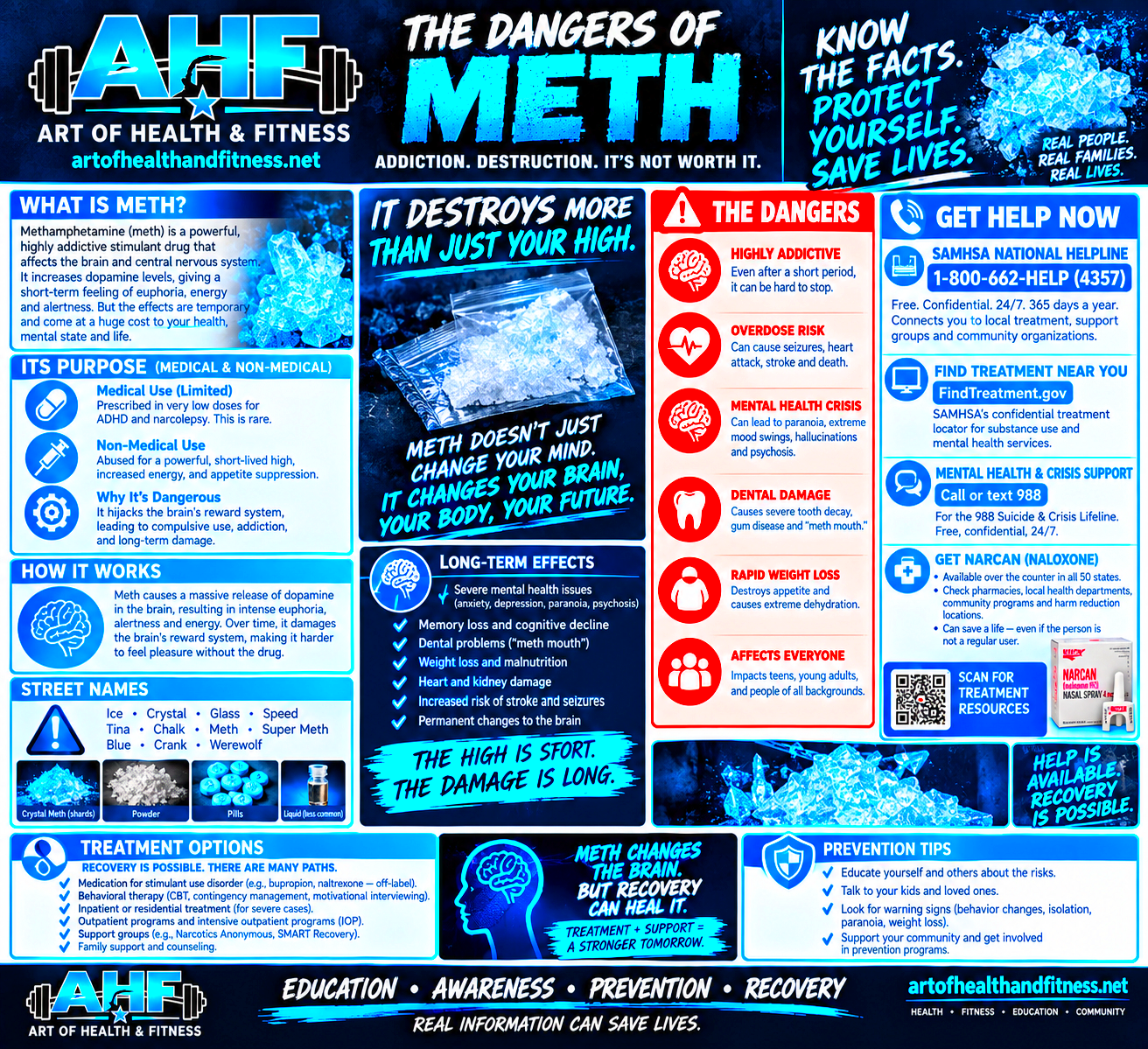
Few drugs alter a person’s physical appearance as visibly, or as quickly, as methamphetamine. The pattern of changes is common enough that it has its own informal name, “meth face,” and it develops through several overlapping mechanisms rather than any single cause. Methamphetamine constricts blood vessels throughout the body, which reduces blood flow and starves the skin of oxygen and nutrients it needs to repair itself and produce collagen. Combined with chronic dehydration and poor sleep, this leads to premature wrinkling, sagging, and a dull, weathered look that can add the appearance of a decade or more to a person’s face within a matter of months.
The formication sensation described earlier also plays a major role. Convinced that something is crawling under their skin, users frequently pick and scratch at their face and arms, creating open sores that heal unusually slowly because of the reduced blood flow and a weakened immune system, sometimes leaving lasting scars. Appetite suppression and the sheer physical toll of repeated binges usually cause significant weight loss, hollowing out the cheeks and giving the face a gaunt, sunken quality. Dental damage, often called “meth mouth,” rounds out the picture: the drug dries out the mouth, cutting off saliva’s natural ability to protect teeth from acid and bacteria, while many users also grind their teeth heavily while high, and the combination can lead to severe decay, cracked teeth, and tooth loss within a surprisingly short window of regular use.
The damage isn’t only cosmetic. Methamphetamine puts serious strain on the cardiovascular system, raising heart rate and blood pressure to levels that increase the risk of heart attack, stroke, and irreversible heart muscle damage, even in otherwise young and healthy users. Repeated use is linked to significant cognitive difficulties, including problems with memory, attention, and decision-making, along with a meaningfully elevated risk of anxiety, depression, and methamphetamine-induced psychosis that can persist even during periods of abstinence. The good news, and it’s a genuine one, is that many of these changes are not permanent. Skin can heal, weight can be regained, and cognitive function often improves substantially after sustained sobriety, though some damage, particularly to teeth and, in severe cases, to brain function, may require ongoing medical or dental care to fully address.
Where Methamphetamine Use Is Highest Across the United States
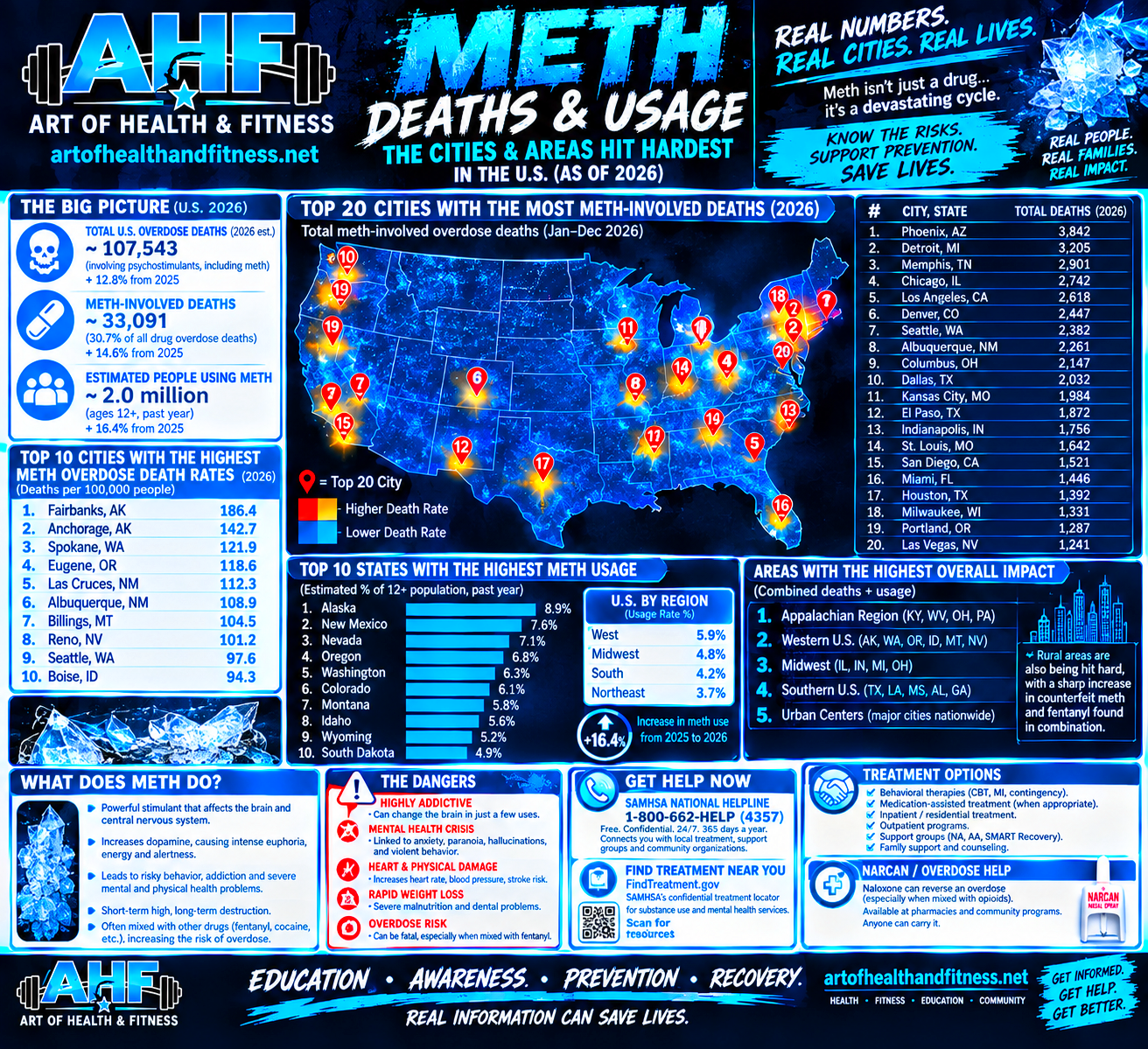
Methamphetamine has never been distributed evenly across the country, and its geography has shifted over time. It first took hold as a distinctly Western drug in the 1990s, concentrated in California, Arizona, Nevada, and the Pacific Northwest, largely because that’s where early domestic production and trafficking routes were most established. Over the past fifteen years, though, meth has spread deep into the Midwest and rural America in a way that’s changed the picture significantly. In Iowa, for example, more than a third of people entering substance use treatment now report methamphetamine as their primary drug, and Nebraska’s attorney general has identified it as the single biggest drug threat facing the state.
Looking at the most recent state-level data on past-year methamphetamine use, the states with the highest rates include West Virginia, where the rate runs more than double the national average, along with New Mexico, Kentucky, Nevada, Washington, Missouri, Louisiana, Oregon, Oklahoma, and Alaska rounding out the top ten. Several of these states are running at close to two to three times the national past-year use rate, which sits at under one percent of the population aged twelve and older. The common thread across most of these high-use states is a mix of rural geography, proximity to major trafficking corridors, and economic conditions that researchers consistently associate with higher rates of stimulant use. At the same time, federal drug threat assessments note that methamphetamine availability has been rising in parts of the South and Southeast that historically saw far less of it, including Louisiana, North Carolina, Mississippi, and northern Florida, which suggests the geographic spread is still very much in motion rather than settled.
Just How Common Is Meth Addiction? The Numbers Behind Use Disorder
According to SAMHSA’s 2025 National Survey on Drug Use and Health, roughly 1.3 million Americans reported using methamphetamine in the past month, and past-year use has held fairly steady at somewhere between 2 and 2.6 million people since 2021, with no statistically significant change over that stretch. Adults twenty-six and older consistently show the highest rate of any age group, at around one percent, meaning this is not primarily a drug used by teenagers or young adults, but one that disproportionately affects working-age and older adults.
What’s more striking than the raw number of users is how many of them go on to develop a diagnosable use disorder. Federal data tracked a rise in past-year methamphetamine use disorder from roughly 684,000 people in 2016 to just over 1,048,000 by 2019, an increase of more than fifty percent in only three years. By that same year, researchers found that most people who had used methamphetamine in the past year already met clinical criteria for a use disorder or were injecting the drug, rather than using it occasionally, which sets meth apart from substances where casual, non-dependent use is more common. In plain terms, methamphetamine carries an unusually high risk of progressing from use to full dependence, and that risk climbs sharply with frequency of use. It’s also reflected in treatment data: the number of people admitted to publicly funded treatment programs with methamphetamine as their primary substance rose from 138,379 in 2010 to 201,021 in 2019, a 45 percent increase in less than a decade.
The Deadly Toll: Overdose Deaths and the Dangers Beyond the High
The clearest measure of how much more dangerous meth has become is the death toll. In 1999, methamphetamine was linked to 547 overdose deaths nationwide. By 2023, that number had climbed to 34,855, with the death rate per capita rising more than fiftyfold over that period. The most recent finalized CDC data shows a meaningful decline from 2023 to 2024, with meth and other psychostimulant deaths falling to 28,722 and the age-adjusted death rate dropping nearly 20 percent, and provisional 2025 data suggests deaths continued falling nationally, though a handful of states, including New Mexico, Arizona, and Colorado, actually saw increases over the same period. Even with that recent improvement, current death rates remain dramatically higher than they were just a decade ago.
That toll hasn’t been shared equally. American Indian and Alaska Native communities have been hit hardest by far, accounting for nearly 45 percent of meth-involved overdose deaths even though they make up a small share of the U.S. population, with death rates in that group nearly tripling between 2018 and 2023 alone. A large and growing share of meth deaths now also involve fentanyl, since the two drugs are increasingly mixed, intentionally or not, somewhere along the supply chain, which has made overdoses considerably harder to predict and survive. Beyond overdose, chronic meth use raises the risk of sudden cardiac events, stroke, seizures, and hyperthermia, a dangerous spike in body temperature that can occur during binges and is sometimes fatal on its own, even without any other drug involved.
Getting Off Meth: What Treatment and Rehab Actually Involve
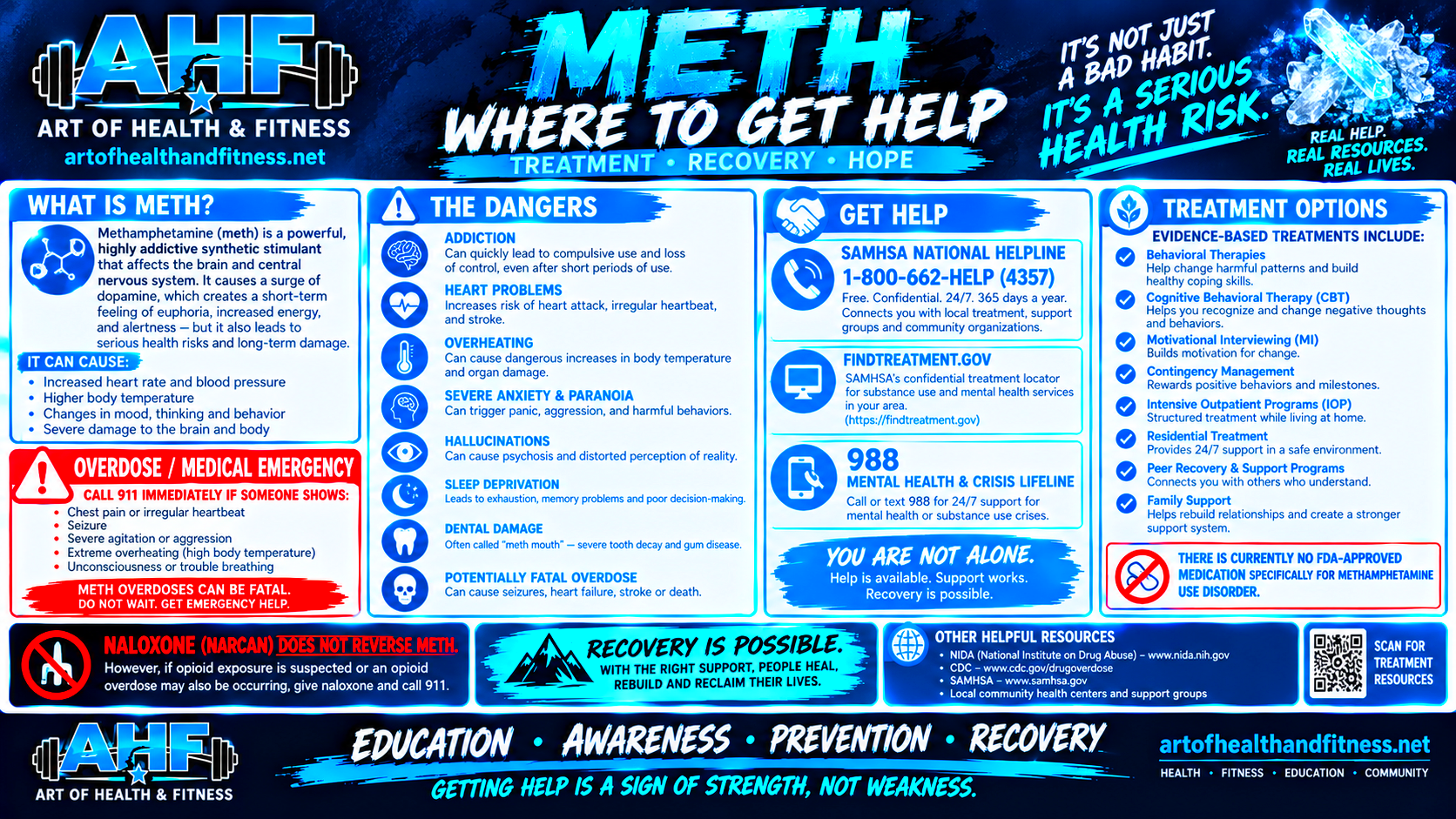
Here’s something that surprises a lot of people: unlike opioid addiction, which can be treated with medications like methadone or buprenorphine, there is currently no FDA-approved medication specifically for methamphetamine use disorder. That doesn’t mean nothing works, though. It means the most effective, evidence-backed treatments right now are behavioral rather than pharmaceutical.
Contingency management currently has the strongest evidence base of any approach for stimulant addiction. It works by offering people tangible incentives, often modest cash-equivalent rewards or vouchers, for verified drug-negative test results, reinforcing sobriety in a very direct, measurable way. Cognitive behavioral therapy is typically used alongside it, helping people identify the specific triggers, people, places, and emotional states that lead to use, and build concrete coping strategies for those moments. Many treatment programs also use a structured approach called the Matrix Model, a sixteen-week intensive outpatient program that combines CBT, family education, individual counseling, twelve-step facilitation, and regular drug testing into one coordinated plan. Peer support communities like Crystal Meth Anonymous, built on the same twelve-step framework as Alcoholics Anonymous, are another resource many people lean on well beyond their formal treatment.
Medication still plays a role, just a supporting one rather than a primary one. Doctors commonly prescribe antidepressants to help manage the depression that follows the crash, along with sleep medication for the insomnia that often accompanies early recovery, and some clinicians use bupropion off-label, since research has shown modest benefit for certain users, particularly men with lighter use histories. None of these medications treat the addiction itself, but they can ease the physical and emotional misery of early withdrawal enough for someone to actually engage with therapy and stay in treatment long enough for it to work. Unlike alcohol or benzodiazepine withdrawal, meth withdrawal isn’t typically life-threatening on its own, but the depression, exhaustion, and occasional suicidal thoughts that show up during the crash are serious enough that medical supervision during this period genuinely matters. Recovery from methamphetamine addiction is absolutely possible, and relapse, when it happens, is common enough that it shouldn’t be treated as a failure so much as a normal part of many people’s longer path toward lasting sobriety.
Methamphetamine addiction is a serious, sometimes life-threatening disease, but it is a treatable one, and thousands of people rebuild their health and their lives after it every year. If you or someone you love is struggling, the Substance Abuse and Mental Health Services Administration operates a free, confidential National Helpline at 1-800-662-4357, available 24 hours a day, every day of the year, to connect people with local treatment and support.
Comments

No Comments Yet