
Benzodiazepines: The Medical Benefits, the Buzz, the Mood Swings, and the Real Dangers
By Rachel Simmons
Few medications lead a double life quite like benzodiazepines. In an emergency room, a benzo can stop a seizure that might otherwise injure the brain. In a doctor’s office, it can pull someone out of a panic attack that feels like the end of the world. And outside of medicine, the same class of drugs gets shared, stockpiled, mixed with alcohol, and chased for the soft, warm calm that comes with it. Names like Xanax, Valium, Ativan, and Klonopin are practically household words, and the FDA has estimated that about 92 million benzodiazepine prescriptions were dispensed from U.S. outpatient pharmacies in 2019 alone, most of them for alprazolam, clonazepam, and lorazepam. That is a staggering number of pills in a staggering number of medicine cabinets, and plenty of the people holding them were never told the whole story. This article lays out both sides honestly: the real medical benefits, what the buzz actually feels like, why the mood swings happen, and where the genuine danger lives.
What Benzodiazepines Are and How They Work
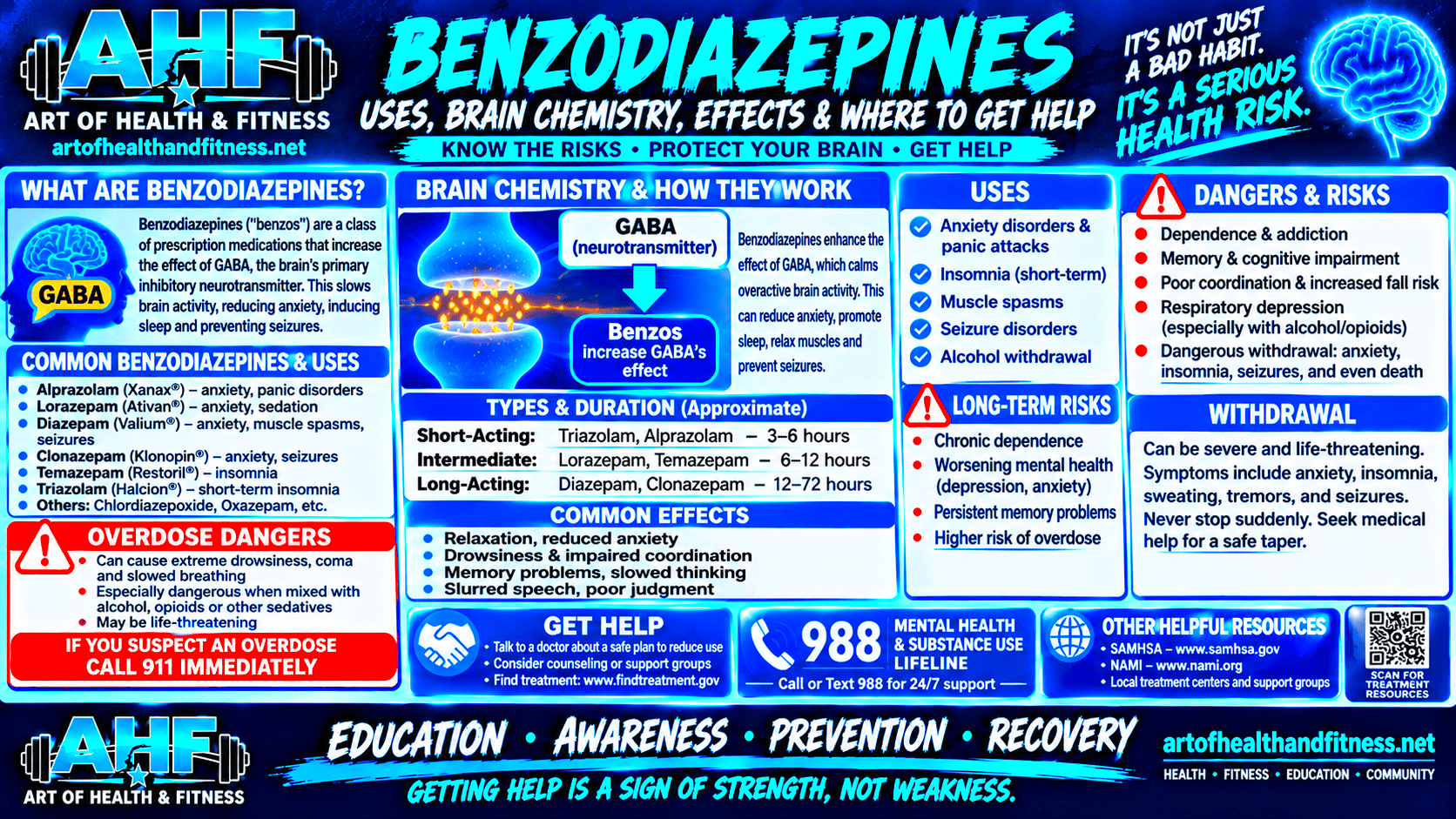
Benzodiazepines, often shortened to “benzos,” are prescription sedative medications that act on the brain’s GABA system. GABA is the main calming chemical messenger in your nervous system, essentially the brake pedal that keeps your brain from running too hot. Benzos make the receptors that respond to GABA more sensitive, so the brake presses harder than it normally would. Nerve cells fire more slowly, the circuits that fuel worry and panic quiet down, muscles loosen, drowsiness sets in, and seizure activity gets suppressed.
That one mechanism explains almost everything about these drugs, the good and the bad. A medication that turns down activity across the brain cannot do it selectively, so the same effect that relieves a panic attack also slows your reaction time, clouds your memory, and, when combined with other depressants, can slow your breathing. The individual drugs differ mainly in speed and staying power. Alprazolam hits quickly and wears off relatively fast, while diazepam and clonazepam act more gradually and linger longer in the body. As you will see, that difference matters a great deal when it comes to both the buzz and the mood swings.
The Positives: Real Medical Benefits
It would be dishonest to write about benzodiazepines as if they were simply villains, because in the right hands and for the right reasons they are among the most effective drugs in medicine. The most common use is anxiety. The FDA lists generalized anxiety disorder, panic disorder, and social phobia among the conditions these drugs are prescribed to treat. Their great advantage is speed. Many antidepressants used for long-term anxiety treatment take several weeks to build up their full effect, while a benzodiazepine can take the edge off within an hour or so. For someone in the middle of a severe panic crisis, or someone just starting an antidepressant and struggling through those early weeks, that fast relief can be a genuine lifeline.
Seizures are the other headline use. Injectable and rescue forms of lorazepam, diazepam, and midazolam are standard first-line treatments for prolonged seizures, because stopping a seizure that will not quit is a race against brain damage. Benzodiazepines are also a cornerstone of treating alcohol withdrawal. Withdrawal from heavy drinking can cause seizures and a dangerous condition called delirium tremens, and a carefully supervised benzodiazepine course is one of the most important tools doctors have to keep a person safe through it.
Beyond that, benzodiazepines are used for short-term insomnia, for muscle spasms, for calming patients before procedures such as MRIs or dental surgery, and for acute agitation in hospital settings. The pattern across all of these good uses is the same: they are specific, supervised, and short. The benefit is real, and so are the limits that come with it.
The Buzz: What Benzos Feel Like and Why People Chase It
Taken as prescribed, a benzodiazepine often feels less like a high and more like someone turning down the volume on your worries. But that effect comes from the same chemistry that produces a buzz, and people who take more than prescribed, or who take someone else’s pills, describe something quite different. The first wave is warmth and heaviness. Shoulders drop, the jaw unclenches, and the racing thoughts that were looping a moment ago simply go quiet. Many people feel loose, talkative, and unbothered, with their inhibitions lowered much the way they are after a few drinks. Some describe a floaty, almost euphoric calm, as though nothing could possibly go wrong.
Then comes the other side of the same coin: slurred speech, clumsiness, heavy drowsiness, a thick mental fog, and gaps in memory. Benzodiazepines can cause anterograde amnesia, which means a person can walk, talk, and even send messages while the brain fails to record any of it. The next morning, whole stretches of the night may simply be missing.
The trouble is that the buzz is exactly what makes these drugs risky. The brain learns very quickly that this pill makes discomfort disappear, and it starts treating that relief as a need. Someone who begins taking a benzo for anxiety can slowly find themselves reaching for it to handle stress, boredom, a rough day, or trouble falling asleep. Others chase the buzz recreationally, often alongside alcohol, because the two seem to amplify each other. That amplification is precisely what makes the pairing so dangerous, which we will get to shortly.
The Mood Swings: Why a Calming Drug Can Rock Your Emotions
Here is the part that surprises many people: a drug prescribed to steady the mood can end up destabilizing it. Several different things are going on at once.
The first is the rollercoaster of the dose itself. With shorter-acting benzos, calm arrives fast and leaves fast. As the medication wears off, anxiety can come roaring back, sometimes stronger than before, a pattern often called rebound anxiety. People start watching the clock, feeling the edge creep back, and taking the next dose to escape it. Peaks of calm followed by valleys of tension, repeated all day long, feel exactly like mood swings, because that is what they are.
The second is emotional blunting. Long-term users often describe feeling flat, detached, or unable to feel joy as vividly as they once did, as if every emotional dial has been turned down at the same time. Doctors also recognize that benzodiazepines can worsen depression in some people, which is one reason the drugs are not a good long-term answer for low mood.
The third is the paradoxical reaction. In a minority of people, especially children, older adults, and anyone who has been drinking, a benzo does the opposite of what is expected and produces agitation, irritability, hostility, or even aggression. It is uncommon, but it is well documented, and it can be frightening for the person and for everyone around them.
The fourth, and often the most intense, is withdrawal. Once the brain has adapted to the drug and the dose is reduced or stopped, the brakes it learned to rely on are suddenly not there. Anxiety, irritability, insomnia, panic, and emotional volatility can surge, frequently feeling worse than the original problem. That is why so many people mistake withdrawal for proof that they still need the medication, and why the cycle is so hard to break without a plan.
The Negatives: Dependence, Tolerance, and Withdrawal
The FDA has been blunt about the downside. In September 2020 it required that the boxed warning, its most serious warning, be updated on every benzodiazepine to cover abuse, misuse, addiction, physical dependence, and withdrawal reactions. The agency explained that physical dependence can develop when benzodiazepines are taken steadily for several days to weeks, even exactly as prescribed. That is a striking statement, because it means dependence is not only a problem for people who misuse the drug. The FDA also noted that in 2018 about half of patients prescribed oral benzodiazepines took them for two months or longer, even though most are intended for much shorter courses.
Tolerance is part of the problem. Over time the brain adapts, the same dose delivers less relief, and the temptation is to take more, which deepens the dependence. When the drug is then stopped suddenly or the dose is cut too fast, the consequences can be serious. The FDA warns that withdrawal can include seizures, which can be life-threatening, and that some patients have had withdrawal symptoms lasting many months. Clinical guidance also lists hallucinations, delirium, psychosis, mania, depression, and suicidal thoughts among the dangerous reactions that can follow abrupt discontinuation. This is exactly why no one should ever stop a benzodiazepine on their own. A gradual taper supervised by a doctor is the safe way down.
The Deadliest Mistake: Mixing Benzos With Alcohol or Opioids
Benzodiazepines on their own are less likely to cause a fatal overdose than many other drugs, but that reassurance disappears the moment other depressants enter the picture. Alcohol and opioids both slow the drive to breathe, and when they are combined with a benzodiazepine the effect is synergistic, meaning the combined danger is far greater than the sum of the parts. CDC researchers have reported that benzodiazepines are involved in roughly one in three opioid overdose deaths in the United States. CDC data show that overdose deaths involving benzodiazepines climbed from roughly 1,300 in 2010 to more than 11,500 in 2017, and most of those deaths also involved prescription opioids.
A later CDC analysis of 23 states covering January 2019 through June 2020 found benzodiazepines involved in 16.8 percent of more than 41,000 overdose deaths, with opioids involved in 91.4 percent of the benzodiazepine-related deaths. The same report flagged a sharp rise in deaths tied to illicit benzodiazepines, with fentanyl involved in two thirds of benzodiazepine-related deaths in early 2020. The practical lesson is simple and sobering: a pill that was not dispensed by a pharmacy is a gamble, because counterfeit tablets sold as Xanax or Valium can contain entirely different drugs, and the person swallowing them has no way to know.
Other Risks Worth Knowing
Even without dependence or overdose, benzodiazepines carry everyday risks that people tend to underestimate. They slow reaction time and impair judgment, which raises the risk of car crashes. They can cloud thinking and memory. In older adults they are linked to falls and fractures, and a broken hip in later life can be the start of a rapid decline. Reviews of the research list overdose, suicide, falls, fractures, cognitive problems, and motor vehicle crashes among the main hazards, with older people especially vulnerable. None of that means benzos are never the right choice. It means the decision deserves real thought, and the dose and duration deserve real limits.
A Smarter Way to Think About Benzodiazepines
The fairest summary is that benzodiazepines are a powerful short-term tool, not a long-term lifestyle. They shine in emergencies, in seizure control, in alcohol withdrawal, and in the short window when someone needs fast relief while other treatments take hold. They become a problem when short-term relief turns into long-term reliance.
If you are prescribed one, take it exactly as directed, tell your doctor about every other medication and substance you use, and avoid alcohol completely. Do not drive until you know how it affects you, and never stop abruptly. Ask your doctor about the plan for how long you will take it and how you will come off it, and ask about longer-term options that do not carry the same dependence risk, such as cognitive behavioral therapy, certain antidepressants, regular exercise, and better sleep habits. The FDA itself urges prescribers to assess the risk of abuse and addiction before prescribing, to use the lowest effective dose for the shortest time, and to taper gradually, so you are entitled to ask for exactly that.
If you or someone you love is struggling with benzodiazepine use, help is available. The SAMHSA National Helpline at 1-800-662-4357 is a free, 24/7 treatment referral service, and if you are in crisis or having thoughts of suicide, call or text 988 right away. Withdrawal and depression can bring dark thoughts, and reaching out is always the right move.
Calm that lasts rarely comes from a pill alone. Consistent training, deep sleep, good nutrition, and a body that feels strong all give your nervous system something steady to lean on, and that is the foundation we build on every day at Art of Health & Fitness. If you are ready to start building those habits, SHOP BRAIN & COGNITIVE SUPPLEMENTS to support your everyday focus and brain health routine, FIND A PERSONAL TRAINER IN YOUR AREA to turn stress into strength, gear up with the AHF CLOTHING SITE, and visit the Real Combat Media Fight Store for boxing, MMA, and self-defense training gear. Supplements are not a substitute for prescribed medication, so keep taking what your doctor has prescribed until you have talked with them about any change.
This article is for educational purposes only and is not medical advice. Always speak with a qualified healthcare provider before starting, changing, or stopping any medication.
Sources: FDA Drug Safety Communication on the benzodiazepine boxed warning (September 2020); CDC study on concurrent opioid and benzodiazepine prescribing.
Comments

No Comments Yet