
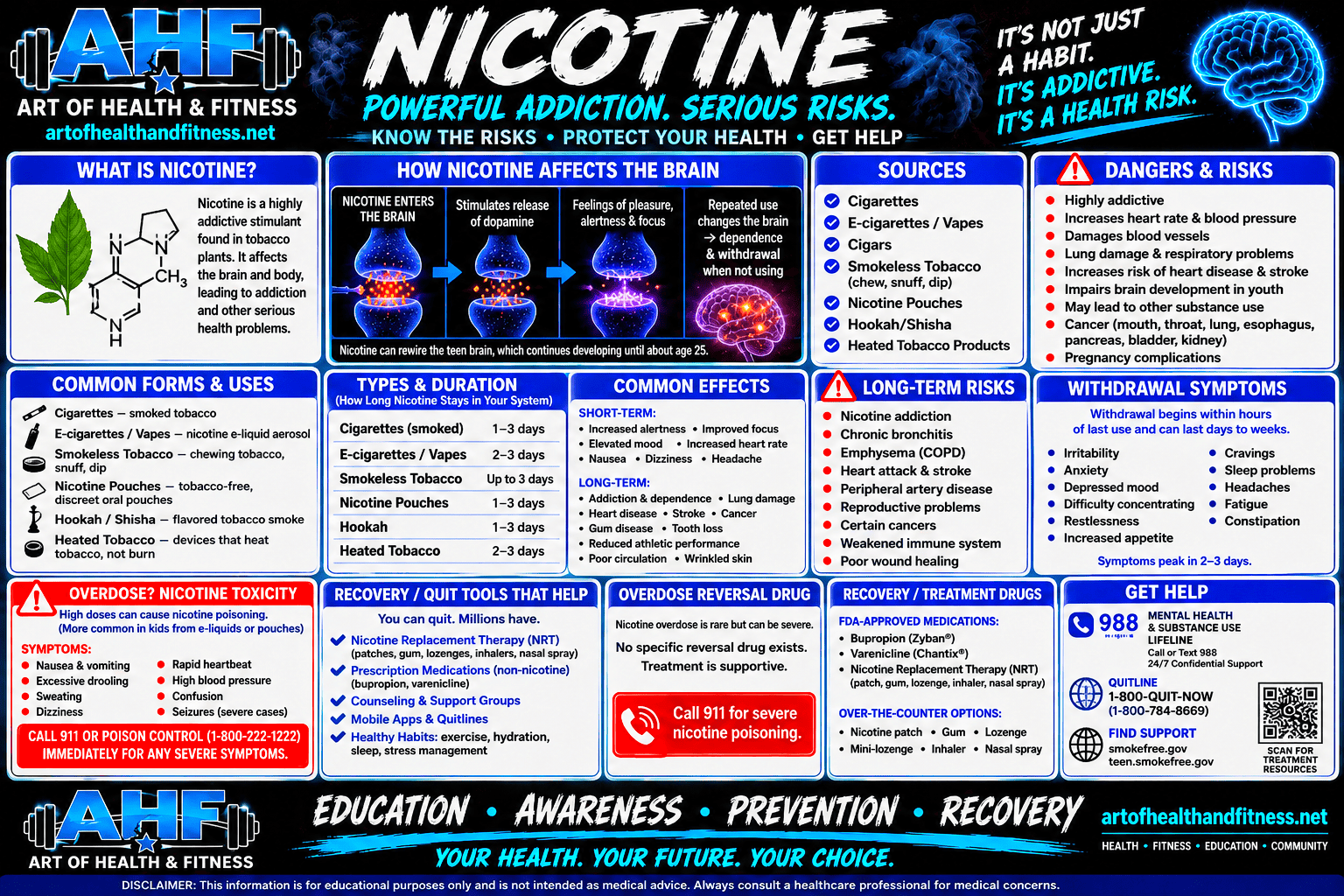
Nicotine Explained: The Buzz, the Brain Chemistry, How Fast Addiction Sets In, and the Real Risks
By Rachel Simmons, Health & Wellness Writer
Nicotine is the most widely used addictive drug in the world, and it is also the one people talk about the least like a drug. It is sold at every gas station, it comes in forms that range from a cigarette to a mint-flavored pouch, and for many people it is part of the daily routine, like a cup of coffee, until the day they try to stop. This article explains what nicotine is and all the forms it comes in, what the buzz actually feels like, how nicotine changes brain chemistry, how long it takes for addiction to set in, the mental benefits researchers have genuinely found and why they do not change the bottom line, how many people the products that deliver it kill every year, and where to turn for help quitting. It is written for education and prevention, and it is not a substitute for medical advice.
What Is Nicotine, and What Forms Does It Come In?
Nicotine is a naturally occurring chemical found in the leaves of the tobacco plant, and it is produced by other members of the nightshade family in tiny amounts, though the traces in vegetables such as tomatoes and eggplant are far too small to have any effect. In the tobacco plant it works as a natural pesticide, which tells you something about how powerful it is. In humans it is a stimulant and a highly addictive one. It is important to separate two things that often get blurred together. Nicotine is the ingredient that creates the buzz and the dependence, but it is the other things in the delivery system, especially the smoke from burning tobacco, that cause most of the cancers, heart attacks, and lung disease.
Nicotine reaches the body in many forms. Cigarettes are still the most common and the most dangerous, and burning tobacco releases more than 7,000 chemicals, at least 70 of which are known to cause cancer. Cigars, cigarillos, and pipes are often seen as milder, but the smoke carries the same toxins, and the nicotine is plenty to hook a person. Hookah, or water pipe smoking, delivers nicotine and smoke in long sessions that can expose a person to a large amount of both. Smokeless tobacco, which includes chewing tobacco, dip, snuff, and snus, delivers nicotine through the lining of the mouth and is linked to mouth, throat, and pancreatic cancers along with gum disease. E-cigarettes and vapes heat a liquid containing nicotine into an aerosol, and many modern products use nicotine salts, which allow a smoother inhale of a higher dose. Nicotine pouches, such as Zyn, are small tobacco-free packets placed between the lip and gum, and they are the fastest-growing category among young people. Heated tobacco products warm tobacco rather than burning it. Finally, there are the FDA-approved nicotine replacement therapies, including patches, gum, lozenges, inhalers, and nasal spray, which deliver nicotine slowly and in controlled doses specifically to help people quit. Those medical products are in a different category from everything else on this list, because they are designed to be stepped down and stopped.
What the Nicotine Buzz Actually Feels Like
The first experience with nicotine is rarely pleasant. First-time users often feel lightheaded, dizzy, and nauseated, with a racing heart and sometimes a cold sweat, because the body is not used to the drug. For people who keep going, those unpleasant effects fade quickly and something else takes their place. The usual description is a quick lift, a feeling of sharper focus and alertness, and at the same time a sense of calm, as though the edges of stress have been softened. That unusual combination of stimulation and relaxation is a big part of why nicotine is so appealing, and why people reach for it both to wake up and to settle down. It also suppresses appetite and raises heart rate and blood pressure.
What makes the nicotine buzz different from most drugs is how short it is. When nicotine is smoked or vaped it reaches the brain in about 10 seconds, faster than many drugs that are injected, and the effect fades within minutes. In a regular user, the drug leaves the body at a steady pace, with a half-life of roughly two hours, so the satisfied feeling is gone long before the day is. That rapid rise and fall is the trap. The brain learns that a hit solves the discomfort, the discomfort returns, and the cycle repeats, sometimes dozens of times a day. Over time most people are no longer chasing a buzz. They are using nicotine to feel normal, and the sense of calm they credit to the cigarette is largely the relief from the withdrawal that the last cigarette created.
Nicotine and Brain Chemistry: Acetylcholine, Dopamine, and a Rewired Reward System
Nicotine works because it looks like a molecule the brain already uses. Acetylcholine is a neurotransmitter involved in attention, learning, memory, muscle movement, and heart rate, and it acts on receptors called nicotinic acetylcholine receptors, named after nicotine for that reason. When nicotine arrives in the brain it attaches to these receptors and switches them on, often more strongly and for longer than the brain’s own acetylcholine does. One subtype, the alpha-4 beta-2 receptor, plays the leading role in addiction.
The key effect happens in the brain’s reward circuit. Nicotine activates receptors on neurons in a region called the ventral tegmental area, and those neurons respond by releasing dopamine in the nucleus accumbens, the brain’s reward center. That dopamine release runs through the same reward pathway that heroin, cocaine, and alcohol activate, which is why nicotine is treated as a true drug of dependence by public health agencies and not as a harmless habit. The speed matters as much as the size of the effect. The faster a drug reaches the brain, the stronger the link between the behavior and the reward, and inhaled nicotine is about as fast as it gets. Nicotine also triggers the release of norepinephrine, which sharpens alertness, along with serotonin, glutamate, GABA, and the body’s natural endorphins, which helps explain the mix of focus, calm, and mild pleasure users describe. Tobacco smoke adds more to the mix, because it contains compounds that block an enzyme called monoamine oxidase, which breaks down dopamine, and that may be one reason cigarettes are harder to quit than some pure nicotine products.
With repeated use the brain adapts. It produces more nicotinic receptors to cope with the constant stimulation, a change called upregulation, and it dials down its own dopamine response. The result is tolerance, which means a person needs more nicotine to get the same effect, and dependence, which means the extra receptors now demand nicotine and the brain feels wrong without it. When nicotine levels fall, the extra receptors go unfilled, and the result is irritability, anxiety, trouble concentrating, restlessness, poor sleep, and powerful cravings. Brain imaging studies suggest that the receptor changes largely reverse within a few weeks of quitting, which fits the timeline for withdrawal, although the learned links between nicotine and routines, moods, and places can trigger cravings for months.
How Long Does It Take to Get Addicted to Nicotine?
There is no single answer, and that is part of what makes nicotine so dangerous. Some people can use it occasionally for years and never become dependent, while others begin to lose control within days. The most influential research comes from Dr. Joseph DiFranza and his colleagues at the University of Massachusetts, who followed a group of more than 1,200 middle school students over several years. Among the young people who had inhaled from a cigarette, about 10 percent reported losing control over their tobacco use within two days of first inhaling, about a quarter within the first month, and half by the time they were smoking only about seven cigarettes a month. Earlier work from the same group found that symptoms of dependence, such as cravings and feeling irritable without a cigarette, appeared within days to weeks of the start of occasional use, often before anyone was smoking daily.
It is fair to add that this research has critics. Some scientists argue that the studies used very sensitive definitions of dependence, and population surveys suggest that roughly a third of teenagers who experiment with tobacco go on to become dependent, which is not everyone but is a very high rate for a drug. The safest conclusion is that there is no minimum dose or waiting period before addiction can begin, that adolescents are especially vulnerable, and that a person has no way of knowing in advance which group they belong to. The developing brain is more sensitive to nicotine, and exposure during adolescence can affect attention, learning, mood, and impulse control, since the brain keeps maturing until the mid-twenties.
The delivery method also shapes the timeline. Cigarettes and vapes deliver nicotine to the brain within seconds, and high-strength nicotine salt vapes and pouches can deliver doses that equal or exceed those of a cigarette, with no smoke to cough on and no smell to give a person away. That combination makes it easy to use all day long, which is exactly the pattern that deepens dependence. Once a person is dependent, withdrawal begins within hours of the last dose, peaks around the second or third day, and generally fades over two to four weeks, though cravings and mood changes can linger longer.
The Mental Benefits Researchers Have Actually Found
Nicotine has a reputation among its users as a mental tool, and there is some science behind that reputation, though it is far less impressive than the marketing and the folklore suggest. Studies of smokers and of people given nicotine have found short-term improvements in attention, reaction time, and working memory, and smokers deprived of nicotine often show impairments in concentration that nicotine reverses. Researchers have spent decades studying nicotinic receptors because the acetylcholine system is so important for thinking and memory. The most promising work has been in people with conditions that affect the brain, including attention-deficit hyperactivity disorder, schizophrenia, Alzheimer’s disease, and Parkinson’s disease, where nicotine and related compounds have shown benefits for specific cognitive symptoms in some studies. Epidemiological research has also found that smokers have a lower risk of developing Parkinson’s disease, and scientists are still investigating whether nicotine is the protective ingredient. Many smokers also say that nicotine helps their mood and eases anxiety.
Here is why none of this makes nicotine a health product. In healthy people, the cognitive boost is modest and hard to separate from the simple relief of ending withdrawal, which means a dependent user may feel sharper after a cigarette mainly because the last one wore off. The mood benefits work the same way, and over time nicotine dependence is associated with more anxiety and depression, not less. The research on Parkinson’s disease and cognition concerns very specific, carefully dosed medical uses, not the use of cigarettes, vapes, or pouches. Nicotine itself raises heart rate and blood pressure, and it is especially harmful to the developing brains of teenagers and the developing babies of pregnant women. No doctor would recommend that anyone start using nicotine for a mental edge, and anyone considering it for a medical reason should talk with a physician first.
The Dangers: How Many People Die From Nicotine Products Each Year?
Tobacco remains the leading cause of preventable death in the United States. The Centers for Disease Control and Prevention attributes more than 480,000 deaths a year in this country to cigarette smoking and secondhand smoke exposure, and other public health groups put the figure closer to 490,000. More than 16 million Americans are living with a smoking-related illness, and on average smokers die about 10 years earlier than people who never smoked. Worldwide, the World Health Organization estimates that tobacco kills more than 8 million people every year, including more than a million nonsmokers exposed to secondhand smoke, which means roughly one in ten adult deaths around the world is tied to tobacco.
The damage is spread across the body. Smoking causes cancers of the lung, throat, mouth, bladder, pancreas, and many other organs, and it is the leading cause of lung cancer deaths. It drives heart attacks and strokes by damaging blood vessels, and it causes chronic obstructive pulmonary disease, which includes emphysema and chronic bronchitis. It harms fertility and pregnancy and worsens almost every chronic health condition. Smokeless tobacco brings its own cancers, and e-cigarettes, while generally thought to be less harmful than cigarettes for an adult who switches completely, are not harmless. They deliver an addictive drug, expose users to chemicals that can irritate the lungs and affect blood vessels, and appear to be risky for young people, who may be more likely to go on to smoke. Using both vapes and cigarettes is more dangerous than smoking alone.
It is worth noting what the death toll is not telling us. Most of those deaths come from the burning of tobacco, not from nicotine in isolation. That is why public health experts consider cigarettes the most dangerous way to take nicotine and why medical nicotine replacement products are considered a safe way to stop. It is also why pouches and vapes are a point of debate, as some argue they may help adult smokers who switch completely, while others warn that they are creating a new generation of nicotine users. Both sides agree on one thing: for a young person who has never used nicotine, none of these products is safe to start.
Is Nicotine Use Declining?
Cigarette smoking is at an all-time low. Government data show that in 2025 only about 1 in 11 American adults smoked cigarettes, a dramatic drop from the roughly four in ten adults who smoked in the 1960s. Youth use has fallen as well. The 2025 National Youth Tobacco Survey found that about 7.2 percent of middle and high school students, roughly 2 million young people, used some form of tobacco product, with e-cigarettes at 5.2 percent, nicotine pouches at 1.7 percent, and cigarettes at 1.4 percent. Those are historic lows for cigarettes, but the numbers also show where the market is moving. Nicotine pouch use among students has roughly doubled since 2021, more than one in four young e-cigarette users vape every day, and nearly all young users choose flavored products. The drug is not going away. It is changing form.
How to Quit and Where to Get Help
Quitting is hard, but it is one of the most worthwhile things a person can do for their health, and the odds improve a great deal with support. Most people try several times before they succeed, and that is normal. Combining medication with counseling works better than either one alone. The medications with the strongest evidence include nicotine replacement therapy, which comes as patches, gum, lozenges, inhalers, and nasal spray, and two prescription medications, varenicline and bupropion. Many people use a patch for steady background nicotine along with gum or lozenges for sudden cravings. A doctor or pharmacist can help set up a plan. Because cravings tend to pass in a few minutes, it helps to have a plan ready for the moments that matter most, such as after meals, with alcohol, during stress, and in the car.
Free help is available in every state. The national quit-line at 1-800-QUIT-NOW (1-800-784-8669) connects callers to a state quit coach, and the federal website Smokefree.gov offers tools, text programs, and plans for quitting smoking and vaping. If nicotine use is tied up with other substance use or with mental health struggles, the SAMHSA National Helpline at 1-800-662-4357 offers free, confidential referrals 24 hours a day, and anyone in crisis can call or text 988. The benefits of quitting start quickly. Heart rate and blood pressure begin to improve within hours, circulation and lung function get better in the following weeks and months, and the risk of heart attack, stroke, and cancer keeps falling for years. For more on this subject, you can browse our addiction and recovery articles.
The Bottom Line
Nicotine is a fast-acting, highly addictive drug that works by borrowing the brain’s acetylcholine system and flooding the reward circuit with dopamine, and it can start to take control in days or weeks, especially in young people. The mental benefits that researchers have found are real but modest, they are hard to separate from withdrawal relief, and they do not offset the harm of the products that deliver it, which kill hundreds of thousands of Americans every year. The brain can recover, though. Receptors return toward normal within weeks of quitting, and people who get support and medication are far more likely to succeed. If you want to quit, a free call to 1-800-QUIT-NOW is a good first step. This article is for general education and is not a substitute for medical advice.
Sources: Centers for Disease Control and Prevention, World Health Organization, National Institute on Drug Abuse, U.S. Food and Drug Administration and the 2025 National Youth Tobacco Survey, American Lung Association, Campaign for Tobacco-Free Kids, DiFranza et al. research on the onset of nicotine dependence published in Tobacco Control and Archives of Pediatrics and Adolescent Medicine, and published reviews of nicotinic receptors, cognition, and Parkinson’s disease.
Comments

No Comments Yet