Ritalin, Adderall, and Other Drugs Prescribed to Kids: The Dangers, the Meth Connection, and a Warning to Parents
By Rachel Simmons, Health & Wellness Writer
Millions of American children take a prescription medication every morning before school, and most of their parents were told the same reassuring thing at the doctor’s office: it is safe, it is closely regulated, and it will help your child focus. For many families that turns out to be true. But the same family medicine cabinet that holds those pills can become a source of danger, because some of the most widely prescribed drugs for children are chemical cousins of methamphetamine, they act on the same brain system, and they are among the most commonly shared, sold, and counterfeited drugs in American schools and college dorms. This article explains how Ritalin, Adderall, and related medications work, how they are connected to meth, what the real dangers are, what else is commonly prescribed to children and what to watch for, and what every parent needs to know. It is written for education and prevention, and it is not a substitute for medical advice. Please do not stop or change any medication your child takes without talking to the prescribing doctor.
What Are Ritalin, Adderall, and the Other ADHD Stimulants?
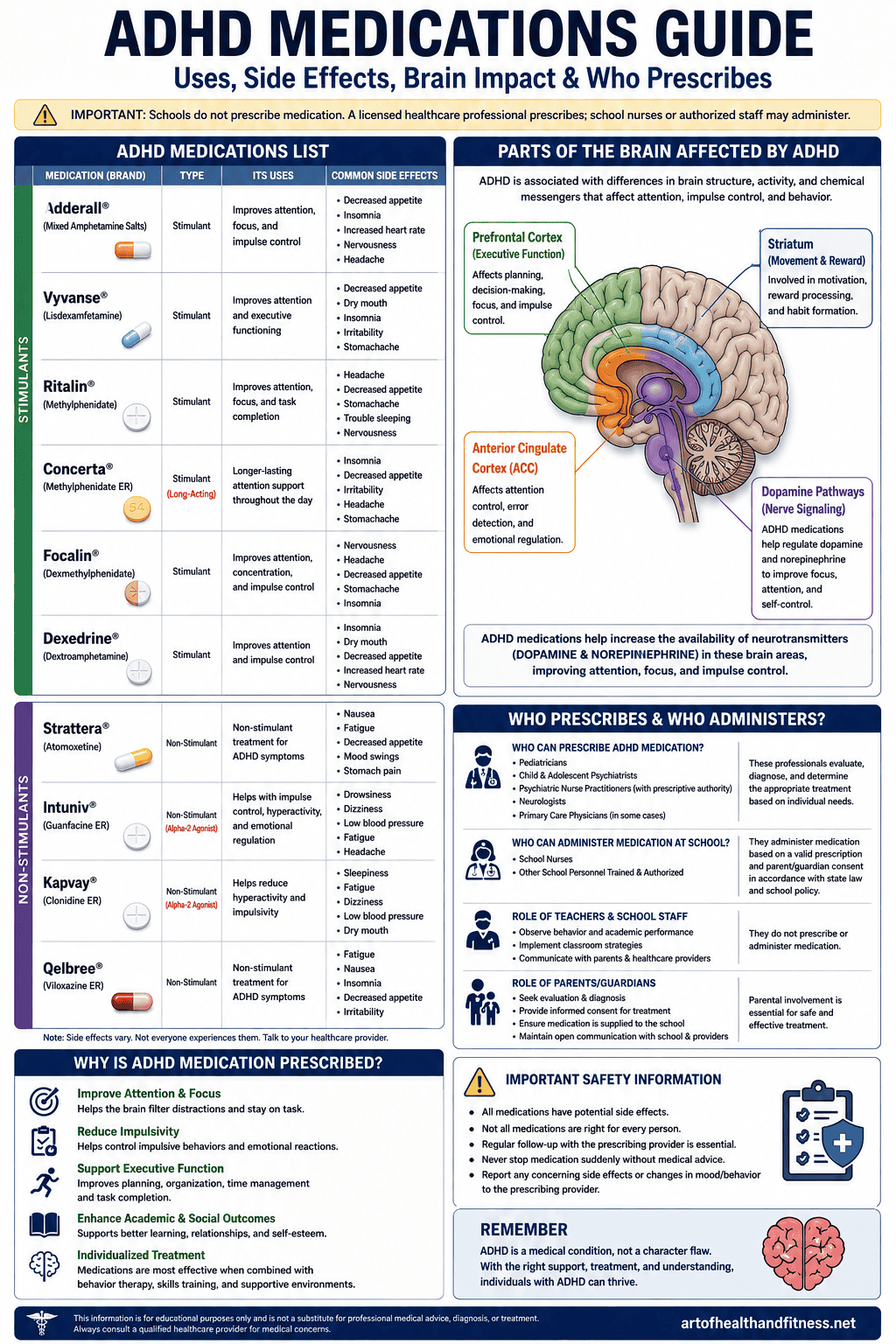
Attention-deficit/hyperactivity disorder, or ADHD, is the most common reason children are prescribed a stimulant. The Centers for Disease Control and Prevention reports that about 1 in 9 American children, roughly 7.1 million, have been diagnosed with ADHD, a figure that rose by about a million between 2016 and 2022. Among children with current ADHD, a little over half were taking medication. The drugs fall into two families. The first is methylphenidate, sold as Ritalin, Concerta, Focalin, and several others. The second is the amphetamines, which include Adderall, Vyvanse, Dexedrine, and Evekeo. There is also a rarely prescribed third option that surprises most parents, a brand-name tablet called Desoxyn, which is methamphetamine. All of them are Schedule II controlled substances, the federal category reserved for drugs with an accepted medical use and a high potential for abuse and dependence.
It is worth saying plainly that these medications work. Stimulants are the most studied treatment for ADHD, and for many children they reduce hyperactivity and impulsivity, improve attention, and make school and family life dramatically easier. Untreated ADHD carries its own risks, including academic failure, accidents, and trouble with relationships, and a large share of children with ADHD do not receive any ADHD-specific treatment at all. The point of this article is not that these drugs should never be used. The point is that they deserve the same respect as any powerful drug, and that parents should know exactly what they are handling.
How Stimulants Work in the Brain
It seems backward to give a stimulant to a child who is already overactive, but the logic comes from brain chemistry. In ADHD, the brain’s attention and self-control circuits, which depend heavily on the chemical messengers dopamine and norepinephrine, appear to work less efficiently. Stimulants raise the amount of those messengers available between nerve cells. Methylphenidate does this mainly by blocking the transporters that normally vacuum dopamine and norepinephrine back into the cell. Amphetamine blocks those same transporters and goes a step further, forcing the transporter to run in reverse so that extra dopamine is pushed out into the gap. With more dopamine and norepinephrine in play, the brain’s filtering and focusing systems get a boost, and a child who could not sit through a worksheet can suddenly follow the page.
Here is the part that matters for parents. Dopamine is also the chemical of the brain’s reward system, the same one involved in cocaine, nicotine, and methamphetamine addiction. What separates a medication from a drug of abuse is mostly a matter of dose and speed. A prescription taken by mouth, especially in an extended-release form, raises dopamine slowly and steadily, which helps focus without producing much of a high. The same drug crushed and snorted, or taken in a larger dose, or chased with other substances, floods the system quickly, and a fast spike is exactly what the brain learns to crave. That is why the FDA warns that snorting or injecting prescription stimulants raises the risk of overdose and death.
Why the High Feels Similar: The Brain Wiring Behind It
To understand why these drugs are grouped together, picture the brain’s reward circuit as a single wire running from a small region deep in the midbrain, the ventral tegmental area, up to the nucleus accumbens in the front of the brain. Every drug that produces a high, whether it is meth, cocaine, or a prescription stimulant, ends up pulling on that same wire by raising dopamine in the nucleus accumbens. Dopamine there tells the brain that something important and rewarding has just happened and that it should be repeated. Norepinephrine, the second chemical these drugs boost, adds the racing heart, sharp alertness, surge of energy, and loss of appetite and sleep that people describe as feeling wired.
The drugs reach that wire in two slightly different ways, and this is where the family resemblance shows. Normally dopamine is cleaned up by a protein called the dopamine transporter, which pulls it back into the nerve cell after each signal. Methylphenidate, the drug in Ritalin, works much like cocaine by blocking the transporter so that dopamine lingers in the gap between cells. Amphetamine, the drug in Adderall, works much like methamphetamine by blocking the transporter and also forcing it to run in reverse, pumping dopamine out of the cell. Brain imaging researchers, including Dr. Nora Volkow and her colleagues at the National Institutes of Health, have documented that both mechanisms raise dopamine in the striatum, the region that contains the nucleus accumbens, and that those increases are tied to people reporting that they feel high and euphoric. Meth belongs to the same pharmacological family as amphetamine. It is simply more potent, faster to reach the brain, and longer lasting.
Here is the most important finding for parents. The same imaging studies found that it is not only how much dopamine rises that matters, but how fast. When healthy adults were given methylphenidate by mouth at therapeutic doses, the drug blocked a large share of their dopamine transporters and raised dopamine, but slowly, over more than an hour, and the volunteers did not feel high. When the same drug was given by injection, it reached the brain in under ten minutes, and people reported a clear high. Researchers have boiled this down to a simple rule: the faster a drug enters the brain, the greater its addictive potential. A child swallowing an extended-release capsule at breakfast is on the slow side of that rule. A teenager who crushes and snorts a pill, or swallows a handful of pills, or a person who smokes or injects meth, is on the fast side, and the brain registers that surge in much the same way no matter which stimulant produced it.
Methamphetamine sits at the extreme end of that spectrum. It is more fat-soluble, so it crosses into the brain quickly, especially when smoked or injected. It triggers a far larger release of dopamine than a typical prescribed dose, and the effect lasts for hours. Repeated heavy use can injure dopamine nerve endings, and brain scans of long-term meth users have shown lower levels of dopamine transporters, which is linked to the flat mood, loss of pleasure, memory problems, and movement problems that people describe in recovery. That is the destination at the far end of a road that can begin with a fast, unprescribed dose.
This overlap matters most for the young. The reward circuit and the prefrontal cortex, which supplies judgment and impulse control, are still maturing into the mid-twenties, so a teenager’s brain is especially quick to learn that a pill equals a rush. A young person who takes a friend’s Adderall before a test, feels a wave of confidence and energy, and wants to feel it again is following the same learning path that leads to dependence on other stimulants. The comedown follows the same script too, with fatigue, irritability, low mood, and craving as dopamine falls back below its normal level.
None of this means a child taking medication as prescribed is getting a meth-like high. They are not. The right dose, delivered slowly, is meant to steady the brain, not light it up, and most children on a properly adjusted dose do not feel high at all. The practical lesson for parents runs the other way. A child who says a pill makes them feel amazing, wired, invincible, or unusually happy, or who is taking more than was prescribed, is describing something different from the intended effect, and that is worth raising with the prescriber right away.
How Ritalin, Adderall, and Meth Are Related
The connection to meth is not a scare tactic. It is chemistry. Amphetamine, the active drug in Adderall and Vyvanse, and methamphetamine, the drug sold on the street as meth, crystal, or ice, are chemical cousins, and the main structural difference is a single extra methyl group. That small addition makes methamphetamine more fat-soluble, so it crosses into the brain faster and more efficiently, and it is generally more potent and longer lasting, with effects the Drug Enforcement Administration describes as lasting six to eight hours. Both drugs release dopamine, norepinephrine, and serotonin, both are Schedule II substances, and both can cause the same dangerous effects at high doses, including rapid heartbeat, overheating, paranoia, and psychosis. Methamphetamine is not only a street drug, either. Desoxyn is FDA-approved for ADHD in children six and older and for short-term treatment of obesity, though it is prescribed sparingly.
Ritalin is chemically different from amphetamine and meth, but it works on the same dopamine system, and the DEA notes that cocaine, amphetamines, and methylphenidate produce similar effects. In other words, whether a child takes Ritalin, Adderall, or Desoxyn, the medication belongs to the same broad family of drugs that acts on dopamine, and the difference between a therapeutic dose and a harmful one depends on how much is taken, how fast it reaches the brain, and who is taking it. If you want to understand what happens when that line is crossed, our article on methamphetamine addiction covers the damage in detail.
Researchers have looked hard at whether giving a child a stimulant for ADHD makes it more likely they will graduate to meth or cocaine later, and the answer is more reassuring than many parents fear. Large national studies that followed American high school students found that having been treated with a stimulant for ADHD was not linked to higher rates of later cocaine or methamphetamine use, and one study found that more years of treatment were associated with less misuse, not more. The warning signal in the research is something different. Teenagers who misuse prescription stimulants, meaning they take them without a prescription or not as directed, are far more likely to go on to misuse other prescription drugs and to use illicit drugs. Medication taken as prescribed is not the problem. Misuse is.
The Dangers of Prescription Stimulants for Children
Even when taken exactly as prescribed, stimulants have side effects, and parents should know them. The most common are loss of appetite, trouble sleeping, stomachaches, headaches, irritability, and a drop in mood as the medication wears off, which some parents describe as a rebound. Some children become flat, withdrawn, or unusually quiet, a change that doctors can often fix by adjusting the dose or the drug. Stimulants can also slow weight gain and, in some children, growth, which is why pediatricians track height and weight. They raise heart rate and blood pressure, they can worsen tics and anxiety, and they can bring out symptoms of mania or psychosis in a small number of children, particularly at higher doses. In rare cases they can cause numbness or color changes in the fingers and toes. Children with structural heart problems or a family history of sudden cardiac death need a careful medical review before starting a stimulant.
Regulators have been tightening warnings in recent years. In 2023 the FDA required stronger boxed warnings, its most serious type, across all prescription stimulants, stressing the risks of misuse, abuse, addiction, overdose, and death and telling doctors to assess each patient’s risk before prescribing and to watch for signs of misuse and diversion throughout treatment. In 2025 the agency required all extended-release ADHD stimulants to carry a warning about weight loss and other side effects in children younger than six, who were found to have higher drug levels and more side effects than older children on the same dose. The signs of an overdose are an emergency and include tremors, seizures, agitation or aggression, overactive reflexes, fast breathing, and a fast or irregular pulse. Anyone showing those signs needs the emergency room or a 911 call.
Sharing, Selling, and the “Study Drug” Problem
The most serious danger for most families is not what happens to the child who takes the pill as directed. It is what happens when the pill leaves the house. The FDA reviewed the research and found that most people who misuse prescription stimulants get them from family members or friends, with estimates ranging from roughly 56 to 80 percent, while only 10 to 20 percent misuse their own prescription and a small fraction buy from dealers or strangers. The highest-risk groups are teenagers and young adults between 18 and 25, college students, and young people who have been diagnosed with ADHD themselves. A child with a prescription is often asked by classmates to share or sell, and the FDA specifically notes that sharing these medicines can be the first step down a path to addiction for the person who receives them.
Many teenagers see Adderall and Ritalin as harmless “study drugs,” a way to cram for a test or stay up for a game. They are not harmless, and research suggests they do far less than students expect for people without ADHD. There is encouraging news in the national data. A large analysis of Monitoring the Future surveys found that teens’ nonmedical use of prescription stimulants fell over nearly two decades and hit a low of about 4.7 percent in 2023, even as medical use edged up. That is real progress, but it still means roughly one in twenty teenagers has taken stimulants that were not prescribed for them.
Counterfeit Pills: When “Adderall” Is Really Meth
This is where the meth connection becomes truly frightening for parents. The DEA has been warning for years that Mexican drug cartels are pressing counterfeit pills that look exactly like Adderall and filling them with methamphetamine. Agents have described seizures of thousands of fake tablets that matched real ones in color, shape, and markings, and they have said that even experts cannot tell the difference by looking. Warnings have come from DEA divisions across the country, from New England to the Midwest, and the agency has said that counterfeit Adderall and other stimulants containing meth continue to turn up. Some counterfeit pills also contain fentanyl, a drug so potent that a lethal dose is about two milligrams, the size of a few grains of salt.
A teenager who buys “Adderall” from a classmate, a friend, or a social media account has no way of knowing what is in it. Fake pills are made in unregulated conditions, sold through online marketplaces and apps, and often arranged with coded emojis. The only safe pill is one that was prescribed to the person taking it and dispensed by a licensed pharmacy.
Other Drugs Commonly Prescribed to Children and Their Dangers
ADHD stimulants are only one piece of a larger picture. Children are now prescribed a wide range of psychiatric and pain medications, and each class has risks that parents should understand.
Non-stimulant ADHD medications such as atomoxetine (Strattera), guanfacine (Intuniv), and clonidine are alternatives for children who cannot tolerate stimulants. Atomoxetine carries a boxed warning for increased suicidal thoughts in children and adolescents, and guanfacine and clonidine can cause drowsiness and low blood pressure, with a risk of rebound high blood pressure if stopped suddenly.
Antidepressants, especially SSRIs such as fluoxetine (Prozac) and sertraline (Zoloft), can be very effective for depression and anxiety, but since 2004 they have carried an FDA boxed warning about an increased risk of suicidal thoughts and behavior in children, teenagers, and young adults up to age 24. That does not mean they should be avoided, since untreated depression is also dangerous. It means a child starting one, or changing a dose, needs close monitoring, and the medication should never be stopped abruptly.
Antipsychotics such as risperidone, aripiprazole, and quetiapine are increasingly prescribed to children for aggression, irritability linked to autism, bipolar disorder, and severe behavior problems. They can cause significant weight gain, high blood sugar and cholesterol, and movement side effects, and children on them need regular metabolic monitoring.
Benzodiazepines such as Xanax, Klonopin, and Ativan are sometimes prescribed for anxiety or seizures. They can cause dependence and withdrawal even when taken as directed, and they are dangerous when combined with alcohol or opioids. Our article on benzodiazepines explains why.
Opioid painkillers are sometimes prescribed after surgery, an injury, or wisdom tooth removal. Some studies have linked legitimate opioid prescriptions in adolescence to a higher chance of later misuse, so it is reasonable to ask whether a non-opioid option will do and, if opioids are needed, to ask for the smallest supply for the shortest time. Read more in our article on the dangers of fentanyl.
Across every one of these classes, the same principle applies. Medication can be the right choice, and it works best as part of a plan that may also include therapy, parent training, school supports, sleep, nutrition, and exercise, not as a standalone fix.
A Warning to Parents
If you take only one section of this article seriously, make it this one. First, treat your child’s stimulant like a controlled substance, because it is one. Keep it locked up, not in a bathroom cabinet or a backpack, and count the pills. Keep it away from visitors and older siblings, since the FDA specifically tells families to store these drugs where others cannot reach them. Second, never let your child share, trade, or sell a single pill, and talk to your child about why. A request from a friend that feels like a small favor can start another young person on a path to addiction. Third, assume your teenager will be offered pills at some point, and tell them plainly that any pill not dispensed by a pharmacy for them, including one labeled Adderall, Xanax, or Percocet, may contain meth or fentanyl and can kill them. DEA resources such as GetSmartAboutDrugs.com for parents and JustThinkTwice.com for teens can help start that conversation.
Fourth, know the warning signs of stimulant misuse: pills disappearing or prescriptions running out early, a teenager who stays awake for days, sudden weight loss, a racing heart, dilated pupils, unusual talkativeness followed by an exhausted crash, agitation, paranoia, mood swings, and falling grades or a new circle of friends. Fifth, be an active partner with your child’s prescriber. Ask why the medication is being recommended, what the alternatives are, what side effects to watch for, how often height, weight, and heart rate will be checked, and when the medication will be reviewed. Keep appointments, report side effects early, and ask about behavioral therapy alongside medication. Finally, if your child is on medication, never stop it abruptly without medical advice, because some drugs cause withdrawal or a rebound of symptoms. Disposal matters as well. Take unused or expired medications to a pharmacy kiosk or a DEA Take Back event rather than leaving them in a drawer.
Where to Get Help
If you are worried that your child is misusing a prescription drug, or has taken a pill from an unknown source, help is available at any hour. The SAMHSA National Helpline at 1-800-662-4357 is free, confidential, and open 24 hours a day, and FindTreatment.gov can help you locate treatment programs. For suspected poisoning or an accidental ingestion, call Poison Control at 1-800-222-1222, and for an emergency such as seizures, severe agitation, chest pain, or trouble breathing, call 911. If a young person is in emotional crisis, call or text 988. Because counterfeit pills can contain fentanyl, many families now keep naloxone, sold as Narcan without a prescription at most pharmacies, in the home. For more on this subject, you can browse our addiction and recovery articles.
The Bottom Line
Ritalin, Adderall, and the other drugs prescribed to children are not villains, and for many kids they are life-changing. But they are powerful, they are chemically and pharmacologically related to meth and cocaine, and they sit at the center of a growing problem of sharing, selling, and counterfeit pills. The research is clear on the two most important points. A child who takes a stimulant as prescribed is not destined for addiction, and a young person who misuses someone else’s pills, or buys a pill that is not from a pharmacy, is taking a risk that can be fatal. The best protection is an informed parent who locks up medications, talks openly, watches closely, and works hand in hand with a trusted doctor. This article is for general education and is not a substitute for medical advice.
Sources: Centers for Disease Control and Prevention, the U.S. Food and Drug Administration Drug Safety Communications on prescription stimulants, the Drug Enforcement Administration and its GetSmartAboutDrugs.com campaign, the DEA Diversion Control Division, the Monitoring the Future study including research published in JAMA and Psychiatric Services, the National Institute on Drug Abuse, PET imaging research by Volkow and colleagues published in the American Journal of Psychiatry and Nature Communications, and The Medical Letter on Drugs and Therapeutics.
Comments

No Comments Yet