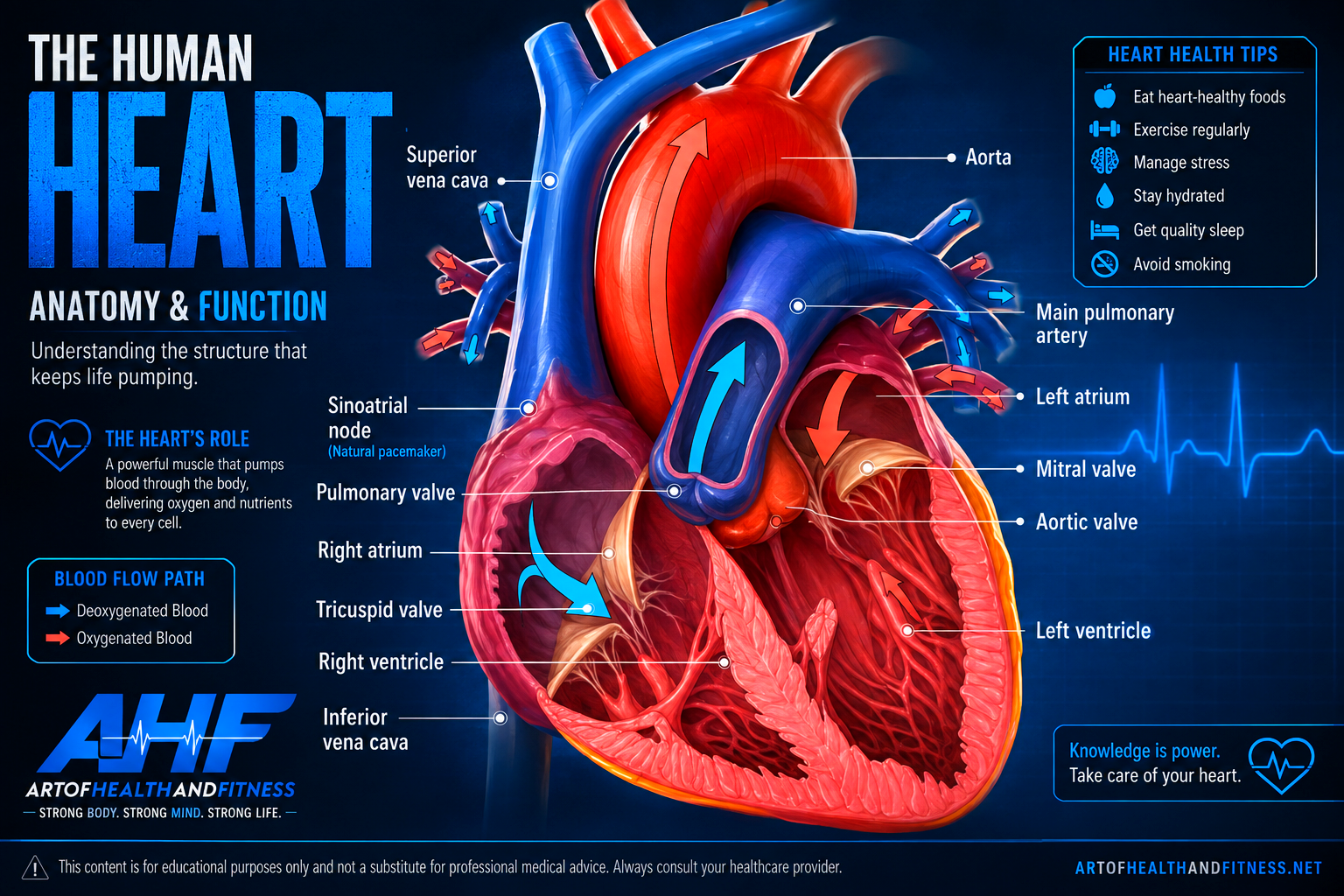
Anatomy of the interior of the heart. Oxygen-poor blood (blue-purple) flows in and is pumped to the lungs; oxygen-rich blood (red) is then pumped out to the rest of the body. Source: National Heart, Lung, and Blood Institute (NIH).
How to Prevent and Treat Heart Disease
By Rachel Simmons, Health & Wellness Writer
This article is for general education and isn’t a substitute for medical advice. Talk to your doctor before starting, stopping, or changing any medication, supplement, or exercise program. If you’re experiencing chest pain, pressure, or other signs of a heart attack, call 911 immediately.
Heart disease kills more Americans than any other cause, more than every form of cancer combined and more than accidents. Close to a million people die from cardiovascular disease in the United States every year, and nearly half of all adults are walking around with high blood pressure, one of the biggest drivers of the problem. Those numbers sound grim, and in a way they are, but heart disease is also one of the most preventable conditions there is. The vast majority of cases trace back to a fairly short list of factors that respond directly to the choices you make and the care you get. This guide walks through what your heart actually does, what goes wrong when heart disease develops, how doctors treat it once it’s there, and what actually moves the needle on prevention.
Understanding Your Heart: The Basics
Your heart is roughly the size of your fist, sits just behind your breastbone, and beats about 100,000 times a day without you ever having to think about it. It has four hollow chambers, as the diagram above shows. The two upper chambers, the right and left atria, collect blood as it returns to the heart. The two lower chambers, the right and left ventricles, do the heavy lifting, pumping blood out to the lungs and the rest of the body. A wall of tissue called the septum separates the right side of the heart from the left.
Blood flows through the heart in one direction, kept on track by four valves that open and close with every beat. Oxygen-poor blood returning from the body enters the right atrium, moves into the right ventricle, and gets pumped to the lungs to pick up oxygen. That oxygen-rich blood then returns to the left atrium, moves into the left ventricle, and gets pumped out through the aorta to supply the rest of the body. The heart muscle itself is fed by its own dedicated network, the coronary arteries, which wrap around the outside of the heart and are exactly what get blocked in a heart attack.
None of this would keep rhythm without the heart’s electrical system. A small cluster of cells called the sinoatrial node, tucked in the right atrium, fires an electrical signal that triggers each heartbeat, which is why it’s often called the heart’s natural pacemaker. That signal spreads across the atria, pauses briefly at a relay station called the atrioventricular node, then travels down into the ventricles, triggering them to contract in a coordinated wave. When that electrical wiring misfires, the result is an arrhythmia, an irregular heartbeat that can range from harmless to dangerous depending on the type.
What Causes Heart Disease
Most heart disease starts with a process called atherosclerosis, the slow buildup of fatty plaque inside artery walls. It begins when LDL cholesterol, the kind often called “bad” cholesterol, works its way into the lining of an artery and triggers inflammation. Your immune system responds the way it would to any injury, and over years that response builds up into a plaque made of cholesterol, calcium, and dead cells. As plaque grows, they narrow the artery and stiffens its walls, restricting blood flow to whatever the artery feeds. If a plaque ruptures, the body forms a clot right on top of it, and that clot can block the artery entirely, which is what happens during most heart attacks and many strokes.
A handful of risk factors drive this process more than anything else. High blood pressure is the most common, damaging artery walls through the sheer mechanical stress of blood pushing against them with too much force, and it’s currently affecting close to half of American adults.
High LDL cholesterol supplies the raw material for plaque formation. Smoking damages the lining of blood vessels directly and is one of the single most preventable contributors to heart disease. Diabetes and insulin resistance accelerate artery damage significantly, which is part of why heart disease and type 2 diabetes so often travel together. Add in excess weight, a sedentary lifestyle, a family history of early heart disease, and chronic stress, and you have the core list of what pushes someone toward a heart attack, a stroke, or heart failure over time. The encouraging part is that every single one of these, aside from family history, is something you have real influence over.
The Different Types of Heart Disease
“Heart disease” is really an umbrella term covering several distinct conditions that affect the heart in different ways.
Coronary artery disease is the most common form, and it’s the one caused directly by the atherosclerosis process described above. As plaque narrows the coronary arteries, the heart muscle gets less oxygen-rich blood, which can cause chest pain known as angina during exertion and, if an artery becomes fully blocked, a heart attack. Heart attack symptoms are often described as crushing chest pressure, but they don’t always show up that way. Pain or discomfort can radiate into the arm, jaw, neck, or back, and can come with shortness of breath, cold sweat, nausea, or lightheadedness.
Women in particular are more likely to experience these less classic symptoms, unusual fatigue, nausea, or back pain, rather than the textbook chest-clutching pain most people picture, which is a major reason heart attacks in women are sometimes missed or diagnosed late. Roughly one in five heart attacks is silent enough that the person doesn’t realize it happened until a later test finds the damage. Any combination of these symptoms is worth calling 911 for immediately rather than waiting to see if it passes.
Heart failure doesn’t mean the heart has stopped; it means the heart has weakened to the point that it can’t pump blood as efficiently as the body needs. It often develops gradually, usually as a downstream consequence of long-standing high blood pressure, coronary artery disease, or damage from a previous heart attack, and it shows up as fatigue, shortness of breath, and fluid buildup in the legs or lungs.
Arrhythmias are problems with the heart’s electrical rhythm. The most common serious one, atrial fibrillation, causes the upper chambers of the heart to quiver instead of beating in a coordinated way, which lets blood pool and raises the risk of clots and stroke significantly.
Valve disease happens when one of the heart’s four valves doesn’t open fully, doesn’t close tightly, or both, forcing the heart to work harder to keep blood moving correctly.
Congenital heart defects, structural problems present from birth, round out the major categories, though these have a different origin story from the lifestyle-driven conditions that make up most adult heart disease.
How Doctors Treat Heart Disease: Medications and Procedures
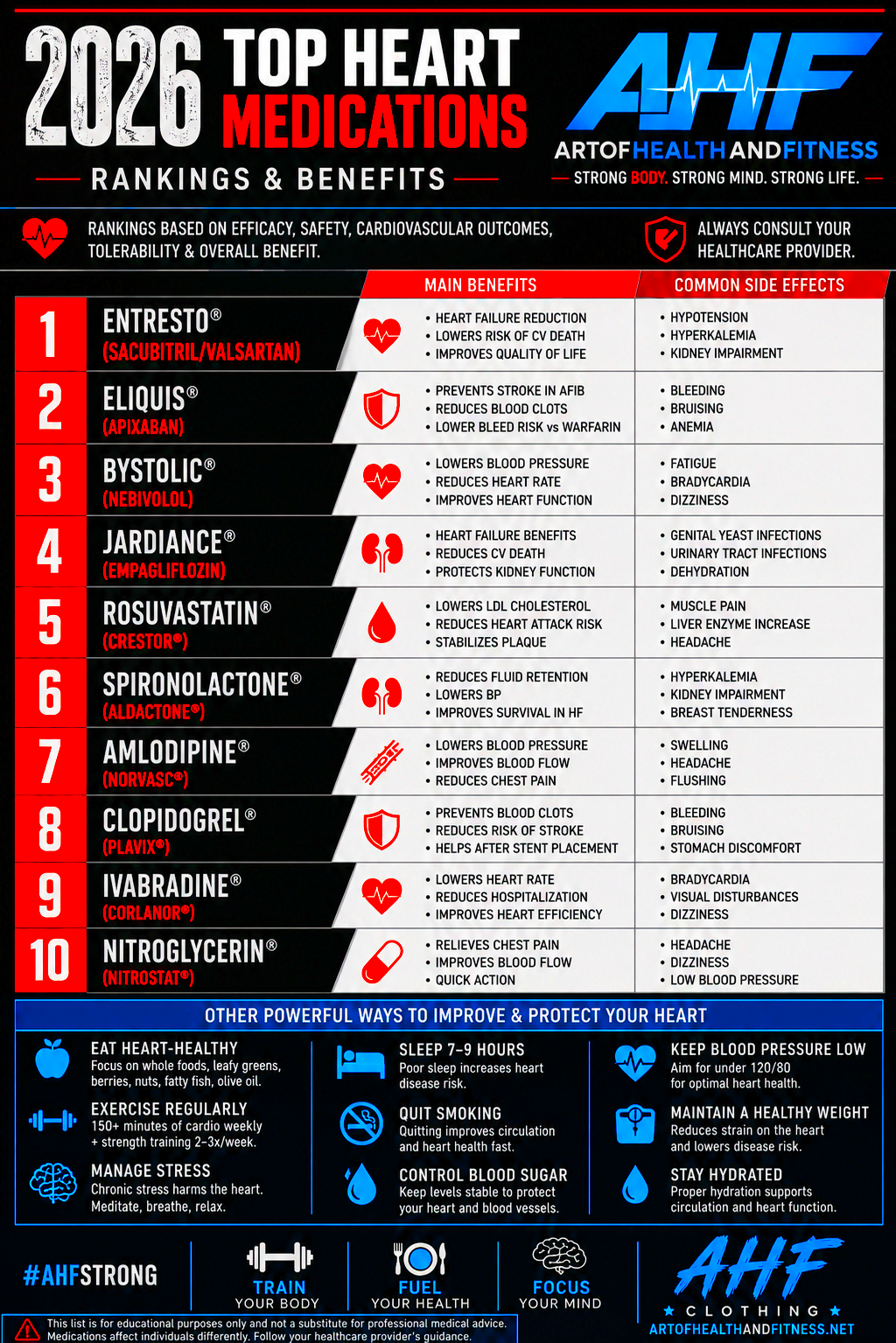
Treatment depends heavily on which type of heart disease is in play, but a few categories of medication and procedure come up again and again.
Statins are the most widely prescribed heart medication, lowering LDL cholesterol and helping stabilize existing plaque so it’s less likely to rupture.
Beta-blockers slow the heart rate and reduce the force of each contraction, easing the heart’s workload, and they’re used after heart attacks and for certain arrhythmias.
ACE inhibitors and ARBs relax blood vessels and lower blood pressure, and they’re a mainstay of both hypertension treatment and heart failure management.
Blood thinners, which include antiplatelet drugs like aspirin and clopidogrel as well as anticoagulants, reduce the risk of the clots that turn a plaque into a heart attack or stroke.
Diuretics help the body shed excess fluid, which is especially useful in heart failure, where fluid buildup is a central problem.
When medication alone isn’t enough, several procedures can restore blood flow or fix structural problems directly. Angioplasty and stenting involve threading a small balloon into a blocked coronary artery to open it, then leaving behind a tiny mesh tube, the stent, to hold it open. Coronary artery bypass graft surgery, commonly called bypass surgery, reroutes blood flow around a severely blocked artery using a healthy blood vessel taken from elsewhere in the body, typically reserved for more extensive blockages than a stent can handle.
Valve repair or replacement fixes a damaged valve either surgically or, increasingly, through minimally invasive catheter-based procedures. Pacemakers and implantable defibrillators are small devices placed under the skin that monitor and correct dangerous heart rhythms, pacing a heart that beats too slowly or shocking one that falls into a life-threatening rhythm.
Catheter ablation treats certain arrhythmias by using heat or cold energy to destroy the small patch of heart tissue responsible for the faulty electrical signal.
How to Prevent Heart Disease
The American Heart Association organizes heart-healthy living into a framework it calls Life’s Essential 8: not smoking, staying physically active, eating well, maintaining a healthy weight, sleeping enough, and keeping cholesterol, blood pressure, and blood sugar in check. It’s a genuinely useful checklist because it captures just about everything the research points to.
Diet carries enormous weight here. The best evidence comes from the PREDIMED trial, a large randomized study published in the New England Journal of Medicine, which found that people at high cardiovascular risk who adopted a Mediterranean-style diet, heavy on olive oil, nuts, vegetables, fish, and legumes, cut their combined risk of heart attack, stroke, and cardiovascular death by around 30 percent compared to a standard low-fat diet. That’s a substantial effect from food choices alone, and it lines up with decades of other research pointing the same direction: less red and processed meat, less added sugar and refined carbohydrate, more fiber, and fat that comes mostly from plants and fish rather than fried food and butter.
Exercise matters just as much. The standard recommendation is at least 150 minutes of moderate aerobic activity a week, roughly 30 minutes most days, along with regular strength training. Physical activity lowers blood pressure, improves cholesterol levels, helps regulate blood sugar, and strengthens the heart muscle itself, which is a muscle like any other and responds to being trained.
Not smoking is probably the single highest-leverage decision on this list, since smoking damages blood vessels directly and dramatically accelerates plaque buildup. Knowing your numbers matters too. Blood pressure under 120 over 80 is considered normal, and anything at or above 130 over 80 consistently is high enough to warrant a conversation with your doctor about lifestyle changes or medication. The same goes for cholesterol and blood sugar, both of which are easy to check at a routine physical and easy to miss if you’re not looking. Sleep and stress round out the list and tend to get the least attention, even though poor sleep and chronic stress both raise blood pressure and inflammation over time.
None of these changes are exotic, and that’s the point. Heart disease develops slowly, over years and decades, which means the ordinary, unglamorous habits, eating real food, moving regularly, not smoking, sleeping enough, and getting your numbers checked, have a very long runway to work with. Combined with the medications and procedures modern cardiology has available when they’re needed, that combination is why heart disease, as dangerous as it is, remains one of the most preventable and treatable diseases in medicine today.
Before you go, a few more resources from Art of Health & Fitness are worth a look. If you want extra support for focus and mental clarity, check out our Shop Brain & Cognitive Supplements page, and if you’d rather work with someone directly, you can find a personal trainer in your area. We’ve also got our own AHF Clothing site if you want to gear up, and if combat sports are your thing, take a look at the Real Combat Media Fight Store.
This article contains affiliate links. Art of Health & Fitness may earn a commission at no extra cost to you. This article is for general education and isn’t a substitute for medical advice, diagnosis, or treatment. Always talk to your doctor before starting, stopping, or changing any medication, supplement, or exercise program, especially if you’re pregnant, nursing, or managing an existing health condition.
About Rachel Simmons:
Rachel Simmons is a health and wellness writer covering the science behind everyday medical questions, from brain health to metabolic and cardiovascular disease, in an accurate way without being overwhelming.
SHOP BRAIN & COGNITIVE SUPPLEMENTS
FIND A PERSONAL TRAINER IN YOUR AREA
VISIT THE REAL COMBAT MEDIA FIGHT STORE

Comments

No Comments Yet