
The Ultimate Muscle-Building Foods List: 50+ Picks and the Science Behind Every One
By Rachel Simmons, Health & Wellness Writer
Building real muscle comes down to three things working together: consistent training, enough total calories, and the right raw materials to actually repair and grow tissue between sessions. That last piece is where most people get stuck, because the supplement aisle makes it sound complicated when it really isn’t. Your body needs protein to rebuild muscle fibers, carbohydrates to fuel the training that breaks them down in the first place, healthy fats to keep your hormones running the way they should, and a wide range of vitamins and minerals to support everything happening behind the scenes. Below is a full breakdown of the foods that do the heaviest lifting in each of those categories, and the actual reasons why each one earns its spot on the list.
Why Food Does the Real Work
No pre-workout or protein shake can make up for a diet that isn’t giving your body what it needs on a daily basis. Muscle protein synthesis, the process your body uses to repair and build new muscle tissue after a workout, depends on a steady supply of amino acids throughout the day, not just a scoop of powder right after you train. Whole foods also bring along fiber, micronutrients, and satiety that isolated supplements simply can’t replicate. That doesn’t mean supplements have no place. It means food should always be the foundation, with supplements filling in the gaps rather than trying to replace the meal itself.
High-Quality Animal Protein: The Building Blocks
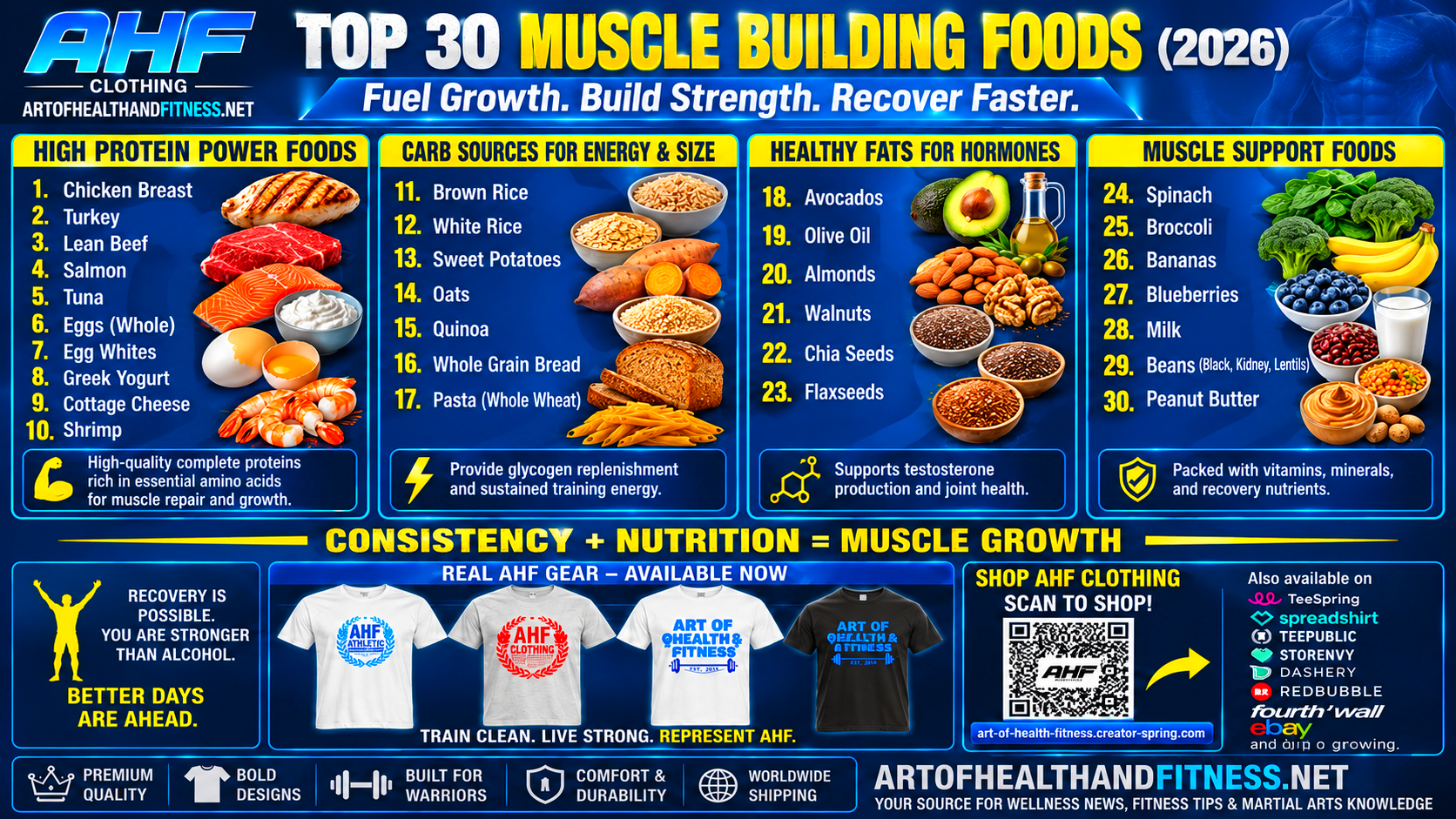
Protein is the nutrient most directly tied to muscle repair, since it supplies the amino acids your body assembles into new muscle fibers. Chicken breast remains a staple for good reason. A 4-ounce cooked serving delivers roughly 35 grams of lean, complete protein with very little fat, and it’s versatile enough to build almost any meal around. Turkey offers a nearly identical protein profile with a slightly richer flavor, and ground turkey is an easy swap in dishes that usually call for beef.
Lean beef brings something chicken and turkey don’t: naturally occurring creatine and a meaningful dose of iron and zinc, both of which support the energy production and immune function that heavy training demands. Salmon and tuna round out the animal protein lineup with high-quality protein plus omega-3 fatty acids, which help control the inflammation that builds up from repeated hard training sessions.
Whole eggs are one of the most complete protein sources available, and the yolk isn’t something to avoid. It carries choline, vitamin D, and healthy fats that support hormone production. Egg whites are useful when you want to add pure protein to a meal without extra calories or fat, which is why so many lifters keep a carton in the fridge alongside a dozen whole eggs.
Greek yogurt and cottage cheese are both slow-digesting dairy proteins loaded with casein, which releases amino acids gradually over several hours, making either one an excellent choice before bed to support overnight muscle repair. Milk itself is a classic post-workout option because it combines protein, carbohydrates, and fluid in one glass, covering three recovery needs at once.
Shrimp is one of the leanest protein sources on this entire list, delivering roughly 20 grams of protein per 3-ounce serving for next to no fat or calories. Bone broth has become popular in fitness circles for its collagen content, which some research links to joint support, an underrated piece of staying healthy enough to keep training hard for years rather than months.
Plant-Based Protein: Just as Capable
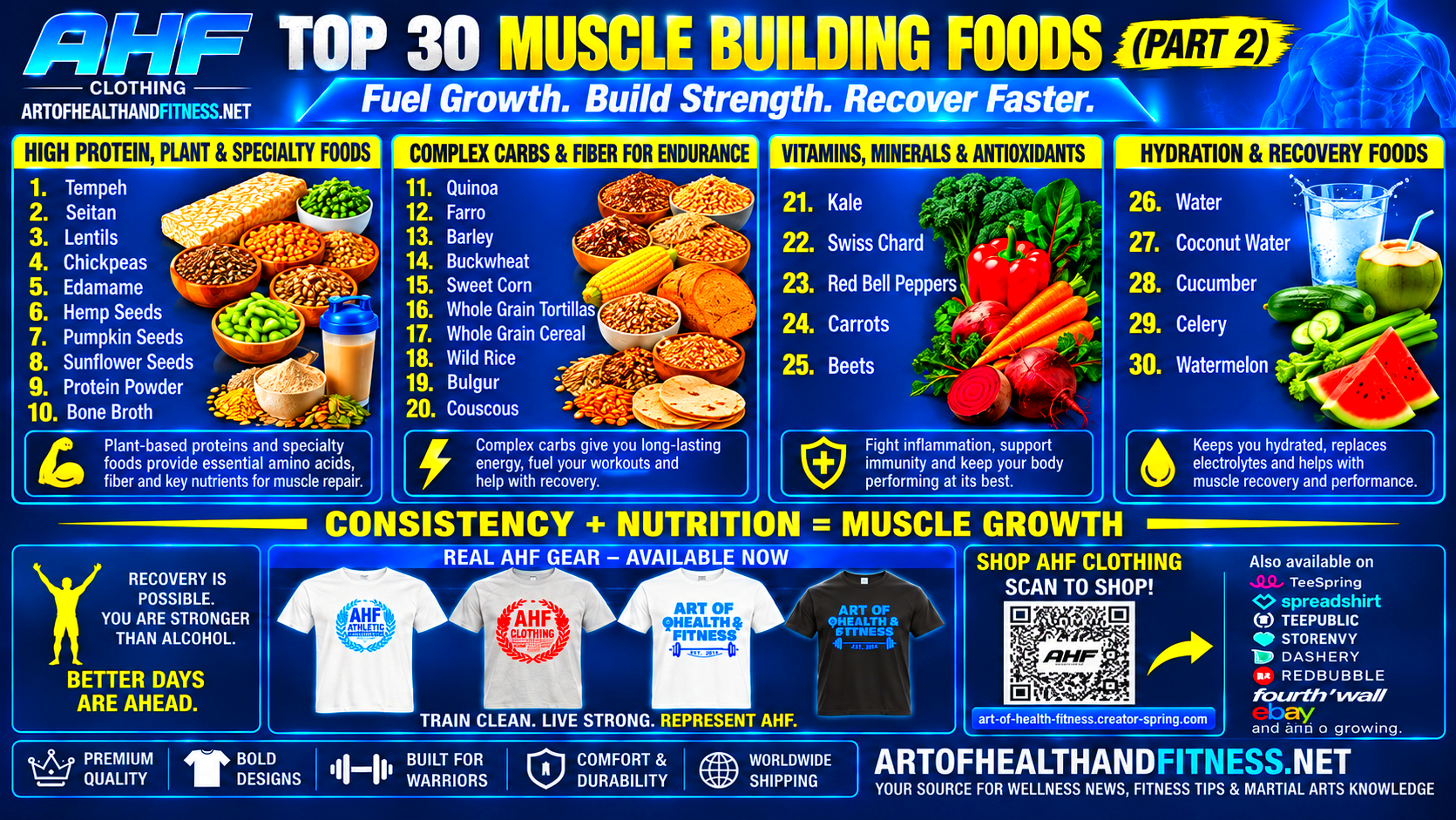
You don’t need meat to build muscle. Tempeh and seitan are both dense, satisfying plant proteins, with tempeh offering a nutty texture from fermented soybeans and seitan delivering an unusually high protein content thanks to its wheat gluten base. Lentils and chickpeas pack protein and fiber into the same bite, which slows digestion and keeps you fuller for longer between meals. Edamame and black and kidney beans offer a similar combination and are easy to add to almost any meal without much prep. Protein powder, whether whey, casein, or a plant-based blend, remains the simplest way to close a protein gap when whole food isn’t practical, especially right around a workout.
Complex Carbohydrates: The Fuel Behind Every Rep
Carbohydrates get an unfair reputation in some fitness circles, but they’re what actually fuels the training that stimulates muscle growth in the first place. Without enough carbohydrate on board, your body will break down muscle tissue for energy instead of using it to build new tissue. Brown rice and white rice are both excellent sources of readily available energy, with brown rice offering more fiber and white rice digesting faster, which can actually be an advantage right before or after a workout. Sweet potatoes bring the same steady energy along with a strong dose of vitamin A and potassium, an electrolyte your muscles need to contract properly.
Oats and quinoa are both slow-digesting carbohydrates that keep energy steady for hours, and quinoa has the added benefit of being a complete plant protein in its own right. Whole grain bread and whole wheat pasta make it easy to build a high-carbohydrate meal around the protein sources above without much effort. Farro, barley, and buckwheat are less common but worth rotating in for their fiber content and slightly different micronutrient profiles, and sweet corn and wild rice offer the same steady fuel with a bit more variety on the plate. Bulgur and couscous cook in minutes and work well in high-volume meal prep, while whole grain tortillas and cereal are practical, everyday ways to keep carbohydrate intake consistent without overthinking every meal.
Healthy Fats: The Hormones Behind Muscle Growth
Dietary fat isn’t the enemy of a lean physique. It’s essential for producing testosterone and other hormones directly involved in building muscle, and it also helps your body absorb fat-soluble vitamins. Avocados and olive oil are two of the most reliable sources of monounsaturated fat, the kind consistently linked to better heart health and lower inflammation. Almonds and walnuts add healthy fat alongside a meaningful amount of protein and fiber, making them an efficient snack for anyone trying to hit higher calorie targets without constant meal prep.
Chia seeds and flaxseeds are among the best plant sources of omega-3 fatty acids, and both absorb liquid to form a gel that can be stirred into oatmeal, smoothies, or yogurt. Hemp seeds, pumpkin seeds, and sunflower seeds each bring their own mix of healthy fat, protein, and minerals like magnesium and zinc, both of which play a role in muscle function and hormone production. Sesame seeds and tahini add the same benefits with a flavor that works particularly well in savory cooking, and nut butters like peanut and almond butter remain one of the easiest ways to add calories and healthy fat to a shake or a slice of toast when you’re trying to eat in a surplus.
Micronutrient Powerhouses: Vegetables and Fruit
Vitamins and minerals don’t build muscle directly, but they support nearly every process that does, from energy production to inflammation control to the enzyme reactions involved in tissue repair. Spinach and broccoli are two of the most nutrient-dense vegetables available, and dark leafy greens like kale, Swiss chard, and collard greens add iron, calcium, and vitamin K on top of that. Bell peppers deliver an outsized dose of vitamin C, which plays a direct role in collagen production and connective tissue health.
Carrots and beets both support blood flow, and beets in particular have been studied for their nitrate content, which some research suggests can modestly improve training endurance. Bananas are a classic pre- or post-workout carbohydrate thanks to their potassium content, while blueberries bring antioxidants that help manage the oxidative stress that comes with intense training. Oranges and tomatoes round out the list with vitamin C and lycopene, both of which support recovery and long-term health in ways that go beyond any single workout.
Hydration and Recovery: The Piece Everyone Skips
None of the foods above work as well as they should if you’re not properly hydrated. Water is involved in nearly every metabolic process in your body, including the ones responsible for muscle repair, and even mild dehydration measurably reduces strength and endurance. Coconut water offers a natural source of electrolytes that can be useful after a particularly sweaty session. Cucumber, celery, and watermelon are all over 90 percent water by weight, making them easy, low-calorie ways to support hydration while still getting in real nutrients rather than an empty glass of plain water.
Putting It All Together
You don’t need to eat all 50-plus of these foods every single day. The point is to build most of your meals around a protein source, a complex carbohydrate, a healthy fat, and something colorful from the produce aisle, then let consistency do the rest. Muscle is built over months and years of showing up, not any single meal, but the foods on this list make every one of those meals count toward the goal.
Fuel the Work, Then Wear the Proof
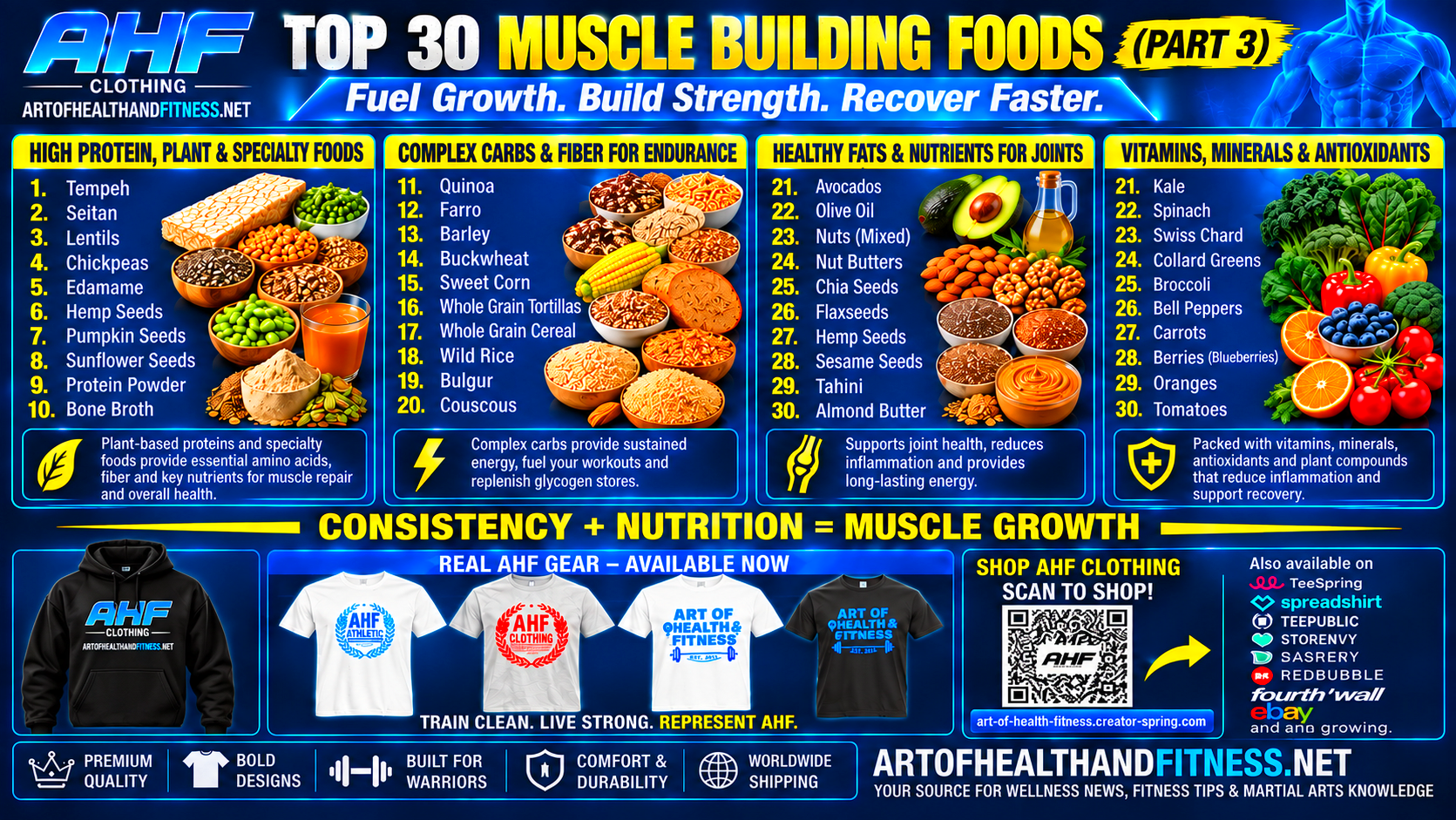
Eating like this and training like you mean it is a lifestyle, not a 30-day plan, and AHF Clothing was built for exactly that mindset. The AHF Athletic and AHF Clothing tees, along with the “Art of Health & Fitness Est. 2014” lineup and the crewneck hoodie, are made for people who train clean, lift heavy, and live strong, not people who just talk about it. Premium quality, bold designs, and gear built to handle real training, shipped worldwide. Recovery is possible. You are stronger than whatever is trying to hold you back. Better days are ahead. Shop the full AHF Clothing lineup now at art-of-health-fitness.creator-spring.com.
Sources: USDA FoodData Central, Academy of Nutrition and Dietetics, International Society of Sports Nutrition, Harvard T.H. Chan School of Public Health, and NIH/NCBI research summaries.
SHOP BRAIN & COGNITIVE SUPPLEMENTS
FIND A PERSONAL TRAINER IN YOUR AREA

Comments

No Comments Yet