

The Lymphatic System: Functions, Key Parts, and How to Improve Every Part of It
By Rachel Simmons
Most people can name their heart, lungs, or stomach without thinking twice, but ask someone to explain their lymphatic system, and you’ll usually get a shrug. That’s unfortunate, because this quiet network of vessels, nodes, and organs works around the clock to keep the rest of your body functioning properly. Think of it as your body’s combined defense, drainage, and delivery service rolled into one system. Unlike your heart, it has no built-in pump to keep things moving. That job falls to you.
The lymphatic system carries out four core jobs, and understanding them is the first step toward taking better care of it. It defends your body by fighting infection through white blood cells and immune responses generated in your lymph nodes and other lymphoid tissue. It drains your tissues by clearing out metabolic waste, excess fluid, and toxins that would otherwise build up and cause swelling or sluggishness. It balances your fluid levels by returning excess fluid from your tissues back into your bloodstream, which keeps your circulatory system properly regulated. And it delivers essential nutrients, including fats absorbed from your digestive tract, to the cells and tissues that need them most.
When all of this is working the way it should, you tend to feel it. Clearer skin, steadier energy, an immune system that shrugs off the occasional cold, and a body that bounces back quickly from workouts and illness are all signs your lymphatic system is doing its job. When lymph flow slows down or gets congested, the signs show up just as clearly: swelling, fatigue, brain fog, and a body that seems to hold onto everything it should be flushing out. Because the lymphatic system has no pump of its own, it depends entirely on your movement, your breathing, your hydration, and your daily habits to keep fluid circulating the way it’s designed to. That’s really the theme running through everything below: this system rewards consistency more than almost any other part of your body, and small daily habits do more for it than any single treatment ever could.
In this guide, we’re breaking down every major part of your lymphatic system, what each one actually does, the warning signs that show up when something isn’t draining properly, and specific, practical ways to support each part, along with the daily habits, movement routines, foods, and massage techniques that keep the entire system working as one.

The Key Parts of Your Lymphatic System
Your lymphatic system isn’t a single organ the way your liver or stomach is. It’s a distributed network spread throughout your entire body, and each part plays a distinct role in defending, draining, balancing, and delivering. Here’s what each piece is actually doing.
Lymph Nodes
These small, bean-shaped structures are scattered throughout your body, with clusters concentrated in your neck, armpits, and groin. As lymph fluid passes through them, lymph nodes filter out bacteria, viruses, and abnormal cells, and they’re where much of your immune system activates its response. This is why your lymph nodes sometimes feel swollen or tender when you’re fighting off an infection. They’re doing exactly what they’re supposed to do.
Lymphatic Vessels
Think of these as the highway system that lymph fluid travels on. Lymphatic vessels transport fluid waste from your tissues back toward your bloodstream, running parallel to your blood vessels throughout nearly every part of your body. Because they have no pump behind them, they rely on the natural squeezing of surrounding muscles, along with your breathing, to keep fluid moving forward.
Thymus
Tucked behind your sternum, the thymus is where T-cells mature. These white blood cells coordinate much of your immune system’s response to infection and disease. Thymus function naturally declines with age, which is one more reason it pays to support it early.
Spleen
Your spleen sits on the left side of your abdomen and does double duty. It filters your blood, removing old or damaged red blood cells, and it stores platelets while supporting broader immune function. It’s technically part of your lymphatic system because of the immune tissue it contains, even though its main job involves your blood supply directly.
Bone Marrow
This soft tissue inside your bones is where your body actually produces the white blood cells, or lymphocytes, that are essential for immunity. Without healthy bone marrow function, your entire immune response would be compromised, which is why nutrient intake and quality sleep matter so much here.
Tonsils and Adenoids
Positioned at the back of your throat and behind your nose, your tonsils and adenoids are your first line of defense against germs entering through your mouth and nose. They trap pathogens before those pathogens can travel further into your body, which is exactly why they can become inflamed when you’re exposed to a lot of new germs at once.
Appendix
Long dismissed as a vestigial leftover, your appendix actually contains lymphoid tissue that supports immune function and helps maintain healthy gut bacteria. Modern research increasingly treats it as a reservoir that can help repopulate your gut microbiome after illness, rather than a useless organ your body no longer needs.
Peyer’s Patches
Found in the lining of your small intestine, Peyer’s patches are clusters of lymphoid tissue that monitor pathogens passing through your digestive tract and help regulate immune responses in the gut. Since so much of your overall immune system is centered around gut health, these patches play a bigger role than most people realize.
Lymphatic Ducts
Eventually, all that filtered lymph fluid needs to return to your bloodstream, and that happens through your lymphatic ducts. The thoracic duct is the largest and most important of these, collecting lymph from most of your body and emptying it back into circulation near your left collarbone.
Cisterna Chyli
This sac-like structure sits near your lower spine and acts as a collection point, gathering lymph fluid from your legs, pelvis, and abdomen before sending it up toward the thoracic duct. It’s a small structure, but it’s a critical junction point in your entire drainage system.
Mantle of the Body
Just beneath your skin lies a dense network of lymphatic vessels known as the mantle, which helps drain lymph fluid from your entire body surface. This is the layer that responds most directly to things like dry brushing and massage, since it sits so close to the surface.
Signs Your Lymphatic System May Be Congested
Because your lymphatic system has no pump, fluid can and does slow down when your daily habits don’t support it, and the resulting congestion tends to show up in recognizable ways. Swelling, especially around your legs, ankles, and face, is one of the most common signs, since it usually means fluid isn’t draining out of your tissues efficiently. Persistent fatigue and low energy often follow, along with a kind of brain fog that makes it harder to concentrate. Digestive issues like bloating, slow digestion, and constipation are common too, since your gut relies heavily on healthy lymphoid tissue like your Peyer’s patches and appendix.
Frequent colds or infections can signal that your immune-related lymphatic structures, like your lymph nodes and tonsils, aren’t filtering pathogens as efficiently as they should. Skin issues such as acne and eczema, an achy or heavy feeling in your limbs, and noticeably slower healing after cuts or workouts round out the most common warning signs. None of these symptoms are exclusive to lymphatic congestion, and if they persist, it’s worth talking to a doctor, but they’re a useful signal that it might be time to prioritize the habits below.
How to Improve Each Part of Your Lymphatic System
Once you understand what each part of your lymphatic system does, supporting it becomes much more specific and much more actionable. Here’s how to care for each structure.
Lymph Nodes: Stay well hydrated, incorporate dry brushing and massage into your routine, exercise regularly to keep fluid moving through your nodes, and lean on anti-inflammatory foods like berries, leafy greens, and fatty fish.
Lymphatic Vessels: Move your body every day in some form, whether that’s walking, lifting, or stretching. Rebounding on a mini trampoline is especially effective here, and pairing movement with deep breathing and regular sauna sessions helps keep your vessels clear.
Thymus: Prioritize quality sleep and active stress management, since both directly affect T-cell production. Zinc and vitamin D support thymus function, while excess sugar and environmental toxins work against it.
Spleen: Load up on antioxidant-rich foods like beets, berries, and leafy greens, stay hydrated, and limit alcohol and heavily processed food, all of which put extra strain on this filtering organ.
Bone Marrow: Since bone marrow produces your white blood cells, feed it well with a nutrient-dense diet rich in B12, folate, iron, and protein. Staying physically active and getting consistent, quality sleep both support healthy marrow function.
Tonsils and Adenoids: Good oral hygiene matters more here than people realize, along with staying hydrated and easing up on excessive dairy and sugar. Vitamin C and zinc-rich foods help these tissues do their job as your first line of defense.
Appendix: Support your gut with fiber-rich foods, probiotics, and prebiotics, and stay consistently hydrated. A healthy gut microbiome and a well-functioning appendix tend to go hand in hand.
Peyer’s Patches: Fermented foods support the gut immune tissue here directly, while reducing chronic stress and avoiding overuse of NSAIDs protects the intestinal lining these patches monitor. Omega-3s are especially supportive for this area.
Lymphatic Ducts: Deep breathing plays an outsized role in moving fluid through your ducts, since the pressure changes in your chest during breathing act like a natural pump. Good posture, regular movement, avoiding tight clothing, and keeping your sodium intake in check all help too.
Cisterna Chyli: Daily movement and stretching keep fluid moving through this lower-body collection point. A diet lower in saturated fat, consistent hydration, and massage or sauna sessions all support healthy flow here.
Mantle of the Body: Since this network sits just under your skin, it responds particularly well to daily movement, dry brushing, contrast showers, rebounding, and regular stretching, all of which stimulate the surface-level vessels directly.
Daily Habits That Keep Your Lymphatic System Moving
Because your lymphatic system depends entirely on outside forces to keep fluid circulating, your daily habits matter more here than almost anywhere else in your body. A handful of consistent practices make an outsized difference.
Start with hydration. Water thins your lymph fluid so it can actually flow and flush out waste, and a good target is roughly half your body weight in ounces each day, with a squeeze of lemon or a pinch of electrolytes for extra benefit. Try starting your morning with 16 to 20 ounces before you do anything else.
Movement is just as essential, and it doesn’t need to be complicated. Walking, lifting, stretching, or any form of cardio pumps lymph through your body and prevents the stagnation that leads to congestion. Aim for 30 to 60 minutes daily, and if you sit for long stretches, build in a movement break every 60 to 90 minutes. Rebounding on a mini trampoline is particularly effective for this, and a short walk after meals does double duty for digestion and lymph flow alike.
Dry brushing is a simple five-minute habit that stimulates lymph flow, exfoliates your skin, and supports your body’s natural detox pathways. Use a natural bristle brush in long strokes, always moving toward your heart, and focus on your legs, arms, torso, and back. Doing this right before you shower tends to work best.
If you have access to one, an infrared sauna two to four times a week can open your pores, increase circulation, and help release stored toxins through sessions of 20 to 30 minutes at 120 to 150 degrees Fahrenheit. Just make sure to rehydrate before and after, and consider following up with a cold shower to give your circulation an extra boost.
What you eat matters daily too. Nutrient-dense whole foods, fruits, vegetables, and lean proteins provide the vitamins, minerals, and fiber your lymphatic system needs to function well, while healthy fats support cellular detox. Leafy greens, berries, beets, citrus, and garlic are considered lymphatic superfoods for good reason.
Sleep is when your body does most of its repair and detox work, so aim for seven to nine hours of quality rest on a consistent schedule, in a dark, cool, quiet room. If swelling is an issue, elevating your legs for five to ten minutes before bed can help.
Deep, diaphragmatic breathing deserves its own daily habit slot, since it physically moves lymph fluid through your chest and torso as you breathe. Five to ten minutes of slow belly breathing, using techniques like box breathing or 4-7-8 breathing, makes a real difference.
Chronic stress is one of the most underrated lymph flow blockers, so daily stress management matters just as much as diet or exercise. Meditation, journaling, gratitude practices, time in nature, and simply laughing more with people you enjoy being around all help keep stress hormones and lymph congestion in check.
Round it out with consistent immune support through vitamin C, D, zinc, and selenium, along with probiotics for gut health and herbal support like echinacea, elderberry, and turmeric when needed. And a few times a week, try contrast showers. Start warm, then finish with 30 to 60 seconds of cold water. This simple hot-to-cold switch boosts circulation and lymphatic drainage, and it’s especially effective after a workout.
What Boosts Your Lymph Flow, and What Blocks It
Certain habits consistently support healthy lymph flow: rebounding for 10 to 20 minutes, stretching and yoga, walking in nature, professional lymphatic massage, compression wear, elevating your legs or feet, and simply staying well hydrated throughout the day. On the other side, a handful of common habits quietly work against you. Sitting too long, chronic dehydration, a diet heavy in processed and fried foods, excess sugar and alcohol, ongoing stress, tight-fitting clothing, and inconsistent sleep all slow lymph flow down and contribute to the fatigue, swelling, and brain fog described earlier. Most people are doing a mix of both, so the goal isn’t perfection. It’s shifting the balance more toward the boosters over time.
The Best Lymphatic Exercises and Movement Routines
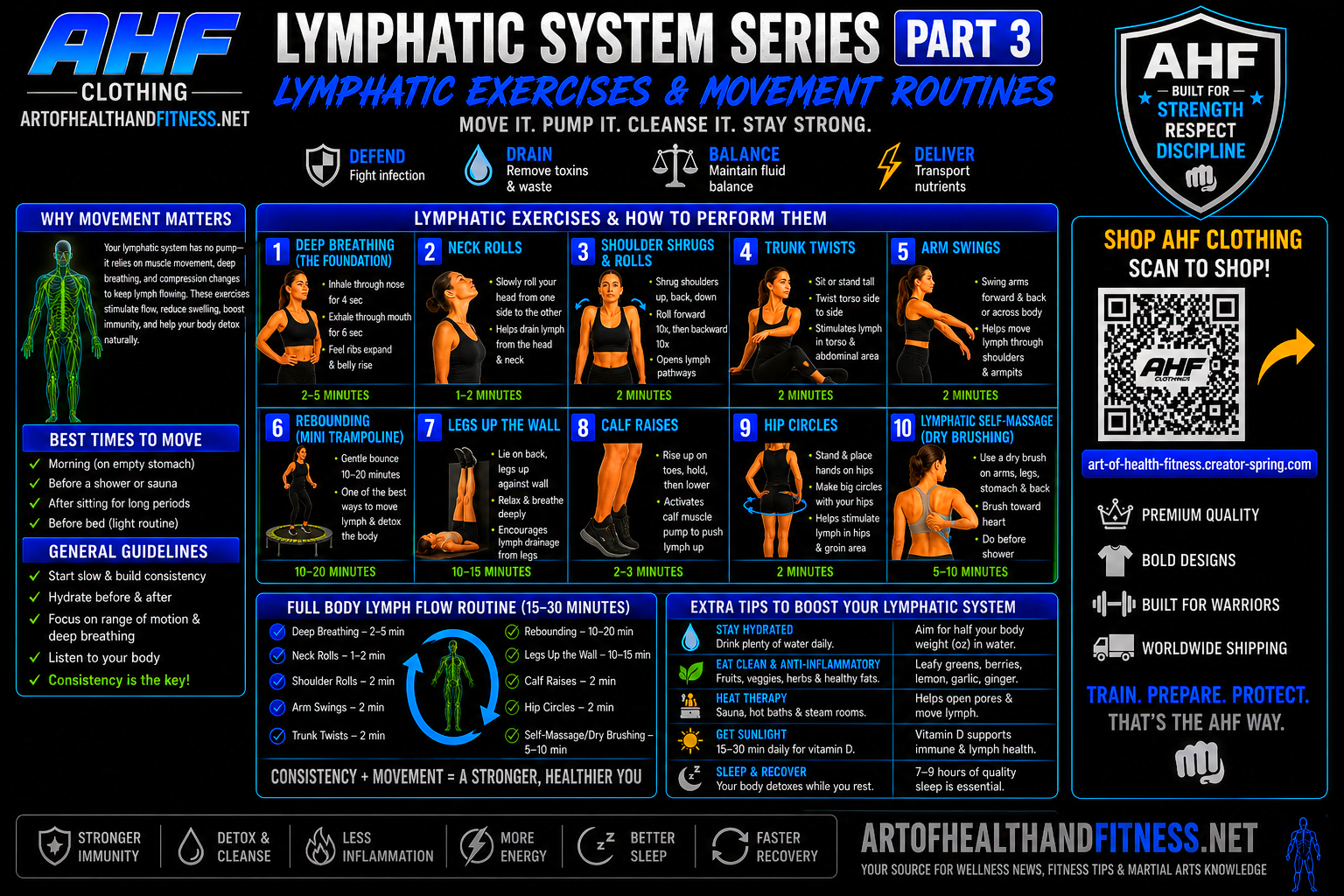
Since your lymphatic system relies entirely on muscle movement, breathing, and compression changes to keep fluid flowing, targeted movement is one of the most effective things you can do for it. These exercises specifically stimulate flow, reduce swelling, support immunity, and help your body detox naturally, and most of them take just a few minutes.
Everything starts with deep breathing, which forms the foundation of lymphatic movement. Inhale through your nose for four seconds, exhale through your mouth for six, and let your ribs expand and your belly rise as you go, for two to five minutes. From there, neck rolls, slowly rolling your head from side to side for one to two minutes, help drain lymph from your head and neck. Shoulder shrugs and rolls, ten forward and ten backward, open up lymph pathways around your upper body in about two minutes.
Trunk twists, done seated or standing by twisting your torso side to side for two minutes, stimulate lymph flow through your torso and abdominal area, while arm swings, moving your arms forward and back or across your body for two minutes, help move lymph through your shoulders and armpits.
Rebounding on a mini trampoline deserves special mention here. A gentle bounce for 10 to 20 minutes is considered one of the single best ways to move lymph and detox the body, since the constant up-and-down motion creates a natural pumping effect throughout your entire system. Legs up the wall, lying on your back with your legs resting against a wall for 10 to 15 minutes while you breathe deeply, uses gravity to encourage lymph drainage from your legs.
Calf raises, rising onto your toes and slowly lowering for two to three minutes, activate your calf muscle pump to push lymph upward, which matters since your legs are often where fluid pools first. Hip circles, standing with your hands on your hips and making big circles for two minutes, stimulate lymph flow through your hips and groin. And lymphatic self-massage through dry brushing, using a dry brush on your arms, legs, stomach, and back for five to ten minutes before your shower, rounds out a complete routine.
Put together, a full fifteen to thirty-minute routine might look like this: two to five minutes of deep breathing, one to two minutes of neck rolls, two minutes of shoulder rolls, two minutes of arm swings, two minutes of trunk twists, ten to twenty minutes of rebounding, ten to fifteen minutes of legs up the wall, two to three minutes of calf raises, two minutes of hip circles, and five to ten minutes of self-massage or dry brushing. The best times to fit this in are first thing in the morning on an empty stomach, before a shower or sauna, after long periods of sitting, or as a lighter wind-down routine before bed. Start slow, hydrate before and after, focus on your range of motion and your breathing, and listen to your body as you build consistency. That consistency, more than intensity, is what actually makes this work.

Foods and Nutrients That Support Lymphatic Health
What you eat has a direct effect on how well your lymphatic system functions, since certain foods actively support your detox pathways while others create the inflammation and toxic buildup that slow lymph flow down.
For detox and cleansing support, lean on lemon, ginger, garlic, cilantro, and dandelion greens, all of which help flush toxins and support liver function alongside your lymphatic system. Anti-inflammatory, immune-boosting foods like berries, turmeric, pineapple, leafy greens, and green tea reduce inflammation while actively fighting infection and strengthening immunity. High-fiber foods including avocado, flaxseeds, chia seeds, broccoli, and asparagus keep your gut clean, regular, and free of the buildup that burdens your lymphatic system. And healthy fats from olive oil, avocado oil, walnuts, salmon, and pumpkin seeds support your cell membranes directly and help reduce inflammation throughout your body.
On the flip side, sugar, processed foods, alcohol, excess dairy, fried foods, and excess red meat all increase inflammation, slow lymph flow, and contribute to the kind of toxic buildup that leads to congestion. You don’t need to eliminate these, but limiting them makes a measurable difference over time.
Beyond whole foods, a handful of specific nutrients power your lymphatic system directly. Vitamin C boosts white blood cell activity, supports collagen production, and strengthens immune defense, and you’ll find it in citrus, berries, kiwi, bell peppers, broccoli, and strawberries. Vitamin D supports immune regulation and helps activate your lymphocytes, and while sunlight is the best source, fatty fish, egg yolks, mushrooms, and fortified foods help too. Zinc is essential for immune cell function and wound healing, found in pumpkin seeds, shellfish, chickpeas, nuts, and lean meats. Magnesium supports detox, reduces inflammation, and helps lymphatic flow directly, and you’ll get it from spinach, almonds, avocados, bananas, and even dark chocolate. Selenium acts as a powerful antioxidant that protects your cells and supports immunity, found in Brazil nuts, tuna, eggs, and sunflower seeds. And probiotics tie it all together, since a healthy gut translates directly into a stronger immune system and better lymphatic drainage. Unsweetened yogurt, kefir, sauerkraut, kimchi, miso, and kombucha are all solid sources to build into your week.
Lymphatic Massage and Self-Drainage Techniques
Manual lymphatic drainage is one of the most direct ways to encourage stagnant fluid to start moving again, and you don’t need professional training to get real benefit from it. The key principle behind every self-massage technique is light pressure, always moving toward your heart, since that’s the direction lymph fluid naturally needs to travel.
Start at your neck and jawline, using your fingertips to gently stroke from under your chin down the sides of your neck toward your collarbone. From there, move to your collarbone area itself, sweeping from the center of your chest outward toward your shoulders on both sides. Your underarms respond well to gentle circular motions, which help stimulate the lymph nodes clustered there. Around your abdomen, massage in a clockwise direction around your navel using light pressure, following the natural path of your digestive system. And in your groin area, use gentle pressure while sweeping from your inner thigh upward, since this is where lymph from your lower body collects before heading further up toward your core.
Dry brushing pairs naturally with self-massage and works best as a daily habit. Start at your feet and brush upward toward your heart using light, gentle strokes for five to ten minutes. Beyond stimulating lymph flow, regular dry brushing exfoliates dead skin, improves circulation, can reduce the appearance of cellulite, and supports your body’s overall detox process.
If you’re dealing with more persistent swelling or congestion, it’s worth seeking out a certified lymphatic drainage therapist. Professional manual lymphatic drainage massage goes deeper than self-massage can, and it’s a legitimate option for anyone who wants more targeted detox and drainage support.
Signs of a Healthy, Well-Draining Lymphatic System
It’s worth knowing what success actually looks like, not just the warning signs. A well-functioning lymphatic system tends to show up as clear skin, strong and consistent immunity, steady energy throughout the day, healthy digestion, and noticeably reduced swelling in your hands, feet, and face. You’ll likely notice better mental clarity, faster recovery after workouts or illness, and an overall sense of well-being that’s hard to fake with anything other than a body that’s actually functioning the way it’s designed to.
The Bottom Line
Your lymphatic system works around the clock, whether you think about it or not, and unlike your heart, it has no pump of its own to rely on. That makes it one of the few body systems where your daily choices, how much you move, how well you hydrate, how you breathe, what you eat, and how you manage stress, directly determine how well it functions. The good news is that none of this requires anything extreme. A daily walk, a few minutes of deep breathing, a dry brushing habit before your shower, and a diet built around whole, anti-inflammatory foods will do more for your lymphatic health than any single product or treatment ever could. Support it consistently, and it will support you right back, for life.
Ready to build these habits into your routine? SHOP BRAIN & COGNITIVE SUPPLEMENTS to support the focus and stress management side of lymphatic health, or FIND A PERSONAL TRAINER IN YOUR AREA if you’d like expert guidance building daily movement into your week. Gear up for your next rebounding session, dry brushing routine, or workout with the AHF CLOTHING SITE, and check out the REAL COMBAT MEDIA FIGHT STORE for more training essentials.
Comments

No Comments Yet